


What is the evaporation rate of a Closed System Cooling Tower?
Nov 28, 2025
Leave a message
The evaporation rate of a closed system cooling tower is a crucial parameter that significantly impacts its performance, efficiency, and operational costs. As a leading supplier of closed system cooling towers, we understand the importance of this metric and are committed to providing our customers with in - depth knowledge and high - quality products to meet their cooling needs.
Understanding Closed System Cooling Towers
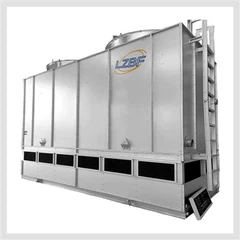
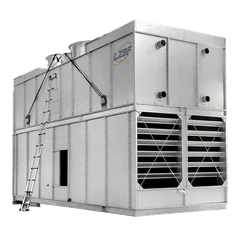
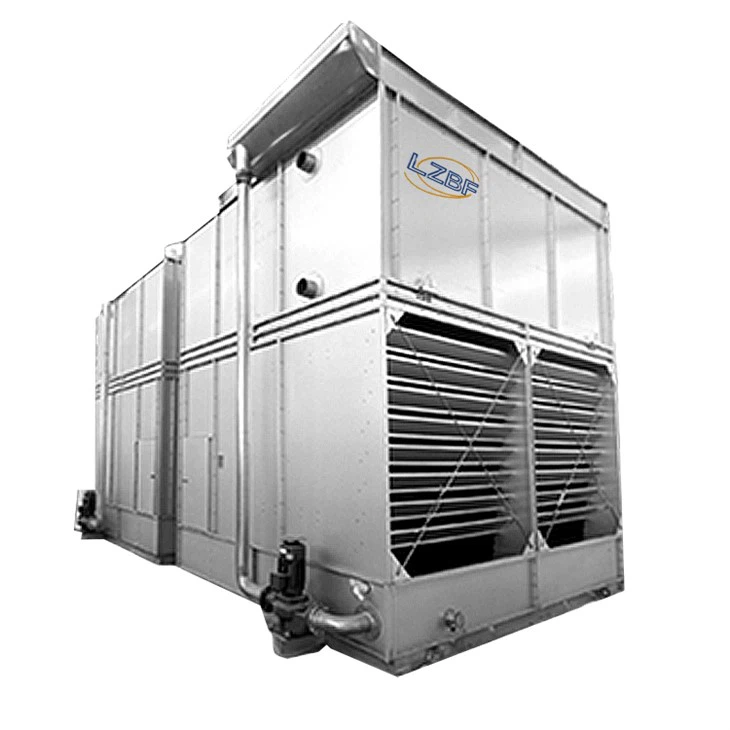
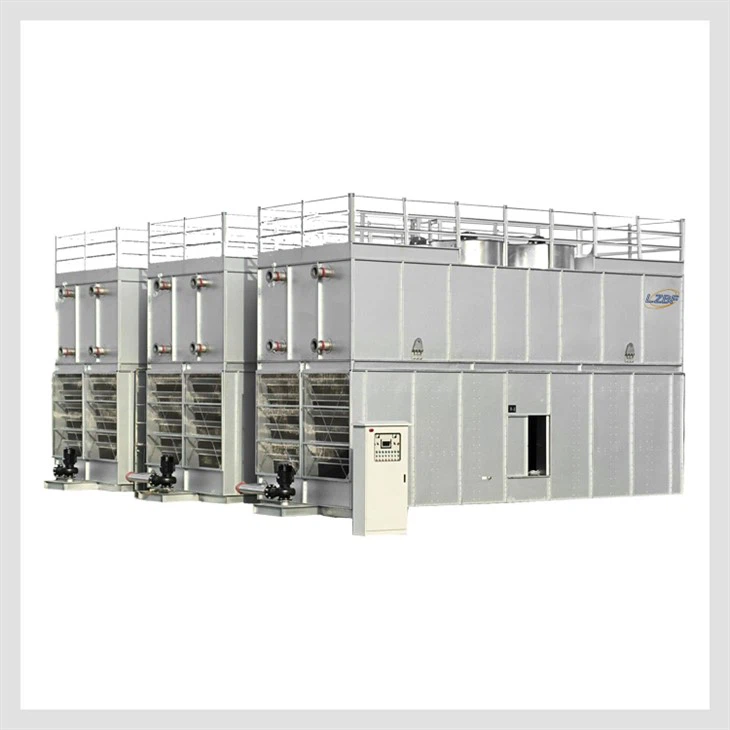
A closed system cooling tower, also known as a closed - circuit cooling tower, operates by isolating the process fluid from the external environment. The process fluid circulates within a closed loop of coils, while water is sprayed over the coils and air is forced through the tower to facilitate heat transfer. This design offers several advantages, such as preventing contamination of the process fluid, reducing water consumption, and minimizing maintenance requirements.
Factors Affecting the Evaporation Rate
-
Ambient Conditions
The ambient temperature and humidity play a vital role in determining the evaporation rate. In hot and dry conditions, the water on the surface of the coils has a higher tendency to evaporate as the air has a greater capacity to hold moisture. Conversely, in cool and humid environments, the evaporation rate is lower because the air is already saturated with moisture. For example, in a desert climate with high temperatures and low humidity, the evaporation rate can be significantly higher compared to a coastal area with mild temperatures and high humidity. -
Airflow Rate
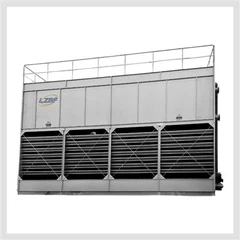
The amount of air flowing through the cooling tower affects the evaporation rate. A higher airflow rate increases the rate of heat and mass transfer between the water and the air. As the air moves over the wet coils, it carries away the evaporated water vapor, creating a continuous driving force for further evaporation. Our Cross Flow Stainless Steel Closed Circuit Evaporative Cooling Cooler is designed with an optimized airflow system to ensure efficient heat transfer and a reasonable evaporation rate. -
Water Temperature
The temperature of the water being sprayed over the coils also influences the evaporation rate. Higher water temperatures increase the kinetic energy of the water molecules, making it easier for them to escape into the air as vapor. When the process fluid in the closed loop is at a high temperature, it transfers heat to the water on the coils, raising the water temperature and promoting evaporation. -
Tower Design and Configuration
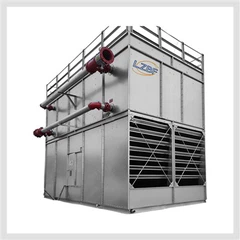
The design of the cooling tower, including the size, shape, and arrangement of the coils and the distribution of the water spray, can impact the evaporation rate. A well - designed tower ensures uniform water distribution over the coils, maximizing the surface area available for evaporation. Our 300 Ton Closed Circuit Cooling Tower is engineered with advanced design features to enhance heat transfer and control the evaporation rate effectively.
Measuring the Evaporation Rate
Measuring the evaporation rate of a closed system cooling tower can be done through various methods. One common approach is to monitor the change in the water level in the tower's basin over a specific period. By accurately measuring the volume of water lost due to evaporation, the evaporation rate can be calculated. Another method involves using sensors to measure the humidity and temperature of the inlet and outlet air, along with the airflow rate, and then applying thermodynamic principles to estimate the evaporation rate.
Importance of Controlling the Evaporation Rate
- Water Conservation
Controlling the evaporation rate is essential for water conservation. In regions where water is scarce, minimizing water loss through evaporation can reduce the overall water consumption of the cooling system. Our Hybrid Closed Circuit Cooling Tower is designed to optimize the evaporation rate, ensuring efficient cooling while conserving water. - Energy Efficiency
An appropriate evaporation rate is crucial for maintaining the energy efficiency of the cooling tower. If the evaporation rate is too high, it may lead to excessive water consumption and increased energy requirements for pumping and replenishing the water. On the other hand, if the evaporation rate is too low, the cooling tower may not be able to dissipate heat effectively, resulting in higher energy consumption to achieve the desired cooling effect. - System Performance and Lifespan
Controlling the evaporation rate helps maintain the performance and lifespan of the cooling tower. Excessive evaporation can cause scaling and fouling on the coils, reducing heat transfer efficiency and increasing maintenance costs. By keeping the evaporation rate within an optimal range, we can ensure the long - term reliability and performance of the cooling system.
Evaporation Rate Calculation
The evaporation rate (E) of a cooling tower can be estimated using the following formula:
[E = m_w\times\frac{(h_{out}-h_{in})}{h_{fg}}]
where (m_w) is the mass flow rate of the makeup water, (h_{out}) is the enthalpy of the outlet air, (h_{in}) is the enthalpy of the inlet air, and (h_{fg}) is the latent heat of vaporization of water.
In practical applications, the evaporation rate can also be determined experimentally by measuring the change in the water level in the tower's basin over a given time period. For example, if the volume of water lost from the basin in one hour is (V) liters, and the density of water is (\rho) kg/L, the evaporation rate in kg/h is (E=\rho\times V).
Case Studies
Let's consider two case studies to illustrate the impact of different factors on the evaporation rate.
- Case Study 1: Industrial Facility in a Hot and Dry Region
An industrial facility in a desert area uses our 300 Ton Closed Circuit Cooling Tower. The ambient temperature is around 40°C, and the relative humidity is 10%. The cooling tower operates with a high airflow rate to enhance heat transfer. Due to the hot and dry conditions, the evaporation rate is relatively high. However, by using our advanced control system, we are able to optimize the water spray rate and airflow to maintain an acceptable evaporation rate while ensuring efficient cooling of the process fluid. - Case Study 2: Commercial Building in a Coastal Region
A commercial building in a coastal area with a mild climate (temperature around 25°C and relative humidity of 80%) uses our Cross Flow Stainless Steel Closed Circuit Evaporative Cooling Cooler. The lower temperature and higher humidity result in a lower evaporation rate. The cooling tower is designed to operate with a lower airflow rate to match the reduced evaporation potential, which helps in conserving energy and water.
Conclusion
The evaporation rate of a closed system cooling tower is a complex parameter influenced by ambient conditions, airflow rate, water temperature, and tower design. As a supplier of closed system cooling towers, we are dedicated to providing our customers with products that offer optimal evaporation rates, ensuring energy efficiency, water conservation, and reliable performance.
If you are interested in learning more about our closed system cooling towers or would like to discuss your specific cooling requirements, we invite you to contact us for a detailed consultation. Our team of experts is ready to assist you in selecting the right cooling solution for your application.
References
- ASHRAE Handbook - HVAC Systems and Equipment. American Society of Heating, Refrigerating and Air - Conditioning Engineers.
- Cooling Tower Institute (CTI) Standards. Cooling Tower Institute.
- Incropera, F. P., & DeWitt, D. P. (2002). Fundamentals of Heat and Mass Transfer. John Wiley & Sons.
Send Inquiry