


What is the difference between direct and indirect cooling units?
Dec 25, 2025
Leave a message
In the field of industrial and commercial cooling systems, understanding the difference between direct and indirect cooling units is crucial for making informed decisions. As a supplier of indirect cooling units, I'm here to shed light on these two types of cooling technologies, their unique features, and the factors to consider when choosing between them.
Direct Cooling Units
Direct cooling units operate on a simple yet effective principle. They directly transfer heat from the substance or environment to be cooled to the cooling medium. One of the most common examples of direct cooling is the direct expansion (DX) air - conditioning system. In a DX system, the refrigerant in the evaporator coil directly absorbs heat from the surrounding air.
Working Mechanism
In a direct cooling setup, the cooling element, such as a refrigerant or a coolant, comes into direct contact with the heat source. For instance, in a refrigeration system, the refrigerant evaporates inside the evaporator tubes placed in the space to be cooled. As the refrigerant evaporates, it absorbs heat from the air, thereby lowering the temperature of the area.
Advantages
- Efficiency: Direct cooling systems can be highly efficient because of the direct contact between the cooling medium and the heat source. This direct interaction allows for a rapid transfer of heat, resulting in quick cooling.
- Simple Design: They generally have a relatively simple design compared to some indirect cooling units. This simplicity can lead to lower installation costs and easier maintenance.
Disadvantages
- Contamination Risk: Since the cooling medium comes into direct contact with the heat source, there is a risk of contamination. For example, in a direct - evaporative cooling system where water is used as the cooling medium, the water can carry impurities and deposit them in the cooled environment.
- Limited Temperature Control: Direct cooling systems may have limitations in precisely controlling the temperature, especially in environments where a very stable and accurate temperature is required.
Indirect Cooling Units
As an indirect cooling unit supplier, I can attest to the many benefits of these systems. Indirect cooling units work by transferring heat from the heat source to an intermediate cooling medium, which then transfers the heat to the ultimate cooling source.


Working Mechanism
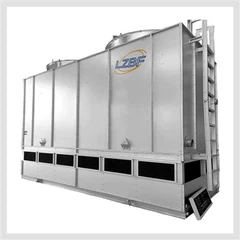
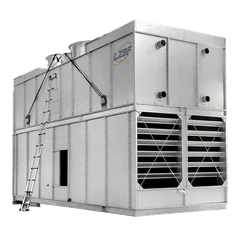
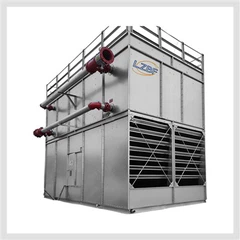
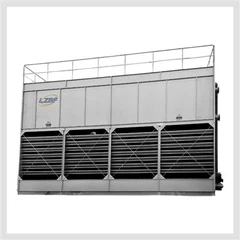
Let's take the example of a Closed Circuit Evaporative Cooling Tower. In this system, the hot fluid (such as industrial process water) flows through a closed circuit of tubes inside the cooling tower. Outside these tubes, water is sprayed, and due to evaporation, it absorbs heat from the tubes and the fluid inside them. The cooled fluid then returns to the industrial process.
Advantages
- Contamination Prevention: Since the heat source and the cooling medium do not come into direct contact, there is no risk of contamination. This is especially important in industries such as food processing, pharmaceuticals, and electronics manufacturing, where a clean and contamination - free environment is essential.
- Precise Temperature Control: Indirect cooling units can provide more precise temperature control. The use of an intermediate cooling medium allows for better regulation of the cooling process, ensuring that the temperature of the heat source remains within a narrow range.
- Flexibility: They offer greater flexibility in terms of the type of cooling medium used and the configuration of the system. For example, an Indirect Evaporative Air Cooler can be used in a wide range of applications, from small - scale commercial buildings to large industrial facilities.
Disadvantages
- Higher Initial Cost: Indirect cooling systems generally have a higher initial cost compared to direct cooling systems. This is due to the more complex design and the need for additional components such as heat exchangers.
- Lower Efficiency in Some Cases: In certain situations, the use of an intermediate cooling medium can result in a slight loss of efficiency compared to direct cooling. However, advancements in technology have significantly reduced this gap.
Factors to Consider When Choosing Between Direct and Indirect Cooling Units
Application Requirements
The nature of the application is a key factor in deciding between direct and indirect cooling. For applications where temperature control and contamination prevention are critical, such as in data centers or semiconductor manufacturing, indirect cooling units are often the preferred choice. On the other hand, for applications where efficiency and simplicity are more important, such as in a small - scale warehouse with less strict environmental requirements, direct cooling may be sufficient.
Energy Efficiency
When considering energy efficiency, it's important to evaluate the entire life - cycle of the cooling system. While direct cooling systems may seem more energy - efficient at first glance due to their simplicity, indirect cooling units can offer long - term energy savings through their ability to maintain optimal operating conditions and precise temperature control.
Space Constraints
Space availability is another important consideration. Direct cooling systems are typically more compact and require less space for installation. Indirect cooling units, especially those with large heat exchangers and cooling towers, may require more space. However, the Closed Loop Cooling Tower System offers a more space - efficient solution in some cases.
Conclusion
In conclusion, both direct and indirect cooling units have their own advantages and disadvantages. The choice between them depends on a variety of factors, including application requirements, energy efficiency, and space constraints. As an indirect cooling unit supplier, I believe that indirect cooling systems offer a superior solution in many industrial and commercial applications, especially those that demand high - quality cooling with minimal risk of contamination and precise temperature control.
If you are in the process of evaluating cooling solutions for your business, I encourage you to reach out to discuss your specific needs. We can provide you with detailed information about our indirect cooling units, including their performance, energy efficiency, and cost - effectiveness. Our team of experts is ready to assist you in making the best decision for your cooling requirements. Contact us today to start the conversation about how our indirect cooling units can meet your needs and provide reliable, efficient cooling for your operations.
References
- ASHRAE Handbook - HVAC Systems and Equipment. American Society of Heating, Refrigerating and Air - Conditioning Engineers.
- Cooling Technology Institute (CTI) Standards. Cooling Technology Institute.
- Industrial Refrigeration Handbook. Wiley - Blackwell.
Send Inquiry