


What are the future trends in closed circuit cooling tower technology?
Jan 20, 2026
Leave a message
In today's industrial landscape, closed circuit cooling towers play a pivotal role in maintaining the efficiency and reliability of various processes. As a leading supplier of closed circuit cooling towers, we are constantly attuned to the technological advancements and trends shaping the future of this industry. This blog delves into the emerging trends in closed circuit cooling tower technology, highlighting how they are set to redefine the way we approach cooling solutions.
Enhanced Energy Efficiency
One of the most significant trends in closed circuit cooling tower technology is the relentless pursuit of enhanced energy efficiency. With the global push towards sustainability and the ever - increasing cost of energy, industries are demanding cooling towers that can deliver the same cooling capacity with less power consumption.
Advanced fan designs are at the forefront of this trend. Variable frequency drives (VFDs) are being increasingly integrated into cooling tower fans. VFDs allow the fan speed to be adjusted according to the actual cooling demand. For instance, during periods of low - load operation, the fan speed can be reduced, resulting in substantial energy savings. According to industry reports, the adoption of VFDs can lead to energy savings of up to 30% compared to traditional fixed - speed fans.
In addition to fan improvements, the design of heat exchangers in closed circuit cooling towers is also evolving. High - efficiency heat exchangers with enhanced surface area and better heat transfer coefficients are being developed. These heat exchangers can transfer heat more effectively, reducing the amount of energy required to cool the process fluid. For example, plate - type heat exchangers are being preferred in many applications due to their compact design and high heat transfer efficiency.
Smart and Connected Technologies
The era of the Internet of Things (IoT) has had a profound impact on closed circuit cooling tower technology. Smart and connected cooling towers are becoming the norm, offering real - time monitoring and control capabilities.
With the integration of sensors, cooling tower operators can now collect a wealth of data, including temperature, flow rate, pressure, and vibration. This data is transmitted to a central control system via wireless communication technologies such as Wi - Fi or Bluetooth. The control system can then analyze the data and make adjustments to the cooling tower operation in real - time.


For example, if the temperature of the process fluid exceeds a certain threshold, the control system can automatically increase the fan speed or adjust the flow of the cooling water. Predictive maintenance is another benefit of smart cooling towers. By analyzing the data over time, the system can predict potential equipment failures before they occur, allowing for timely maintenance and reducing downtime.
Cloud - based platforms are also being used to store and manage the data collected from cooling towers. This enables remote monitoring and control, allowing operators to manage multiple cooling towers from a single location. It also facilitates data sharing between different departments within an organization, leading to more informed decision - making.
Environmentally Friendly Refrigerants and Coolants
As environmental concerns take center stage, the use of environmentally friendly refrigerants and coolants in closed circuit cooling towers is on the rise. Traditional refrigerants such as chlorofluorocarbons (CFCs) and hydrochlorofluorocarbons (HCFCs) are being phased out due to their ozone - depleting potential.
Instead, hydrofluorocarbons (HFCs) with lower global warming potential (GWP) are being used. However, there is a growing push towards even more sustainable alternatives such as natural refrigerants like carbon dioxide (CO₂), ammonia (NH₃), and hydrocarbons. These natural refrigerants have zero ozone - depleting potential and relatively low GWP compared to HFCs.
In addition to refrigerants, the selection of coolants is also being re - evaluated. Water - based coolants are being optimized to reduce chemical usage and water waste. For example, advanced water treatment technologies are being employed to prevent scale and corrosion in the cooling system, which can improve the efficiency of the cooling tower and extend its lifespan.
Modular and Compact Designs
Modular and compact designs are becoming increasingly popular in the closed circuit cooling tower industry. A modular design allows for easy installation, expansion, and replacement of components. This is particularly beneficial for industries with limited space or those that require flexibility in their cooling systems.
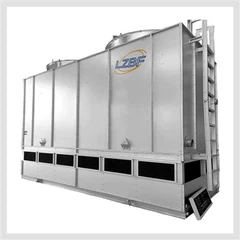
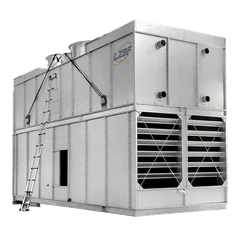
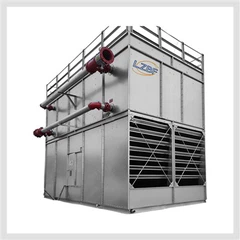
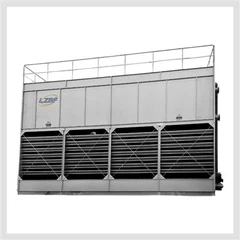
Compact Design Cooling Tower Closed Circuit Coolers offer high cooling capacity in a small footprint. They are designed to be easily integrated into existing industrial processes, minimizing the need for extensive modifications. For example, in a manufacturing facility where space is at a premium, a compact cooling tower can be installed in a confined area, providing efficient cooling without taking up too much floor space.
The modular nature of these cooling towers also allows for easy maintenance. Components can be easily accessed and replaced, reducing the downtime associated with maintenance activities. This results in cost savings for the end - user, as the cooling tower can be quickly back in operation after maintenance or repairs.
Applications in Diverse Industries
Closed circuit cooling towers are finding applications in an ever - expanding range of industries. In the metallurgical industry, Evaporative Cooling For Metallurgical Applications is crucial for maintaining the temperature of equipment and processes. The high - temperature environment in metallurgical plants requires cooling towers that can withstand harsh conditions and provide reliable cooling.
The data center industry is another sector where closed circuit cooling towers are in high demand. With the exponential growth of data, data centers need efficient cooling systems to prevent overheating of servers. Closed circuit cooling towers offer a cost - effective and energy - efficient solution for data center cooling.
In the food and beverage industry, closed circuit cooling towers are used to cool various processes, such as fermentation and pasteurization. The hygienic design of these cooling towers ensures that the cooling process does not contaminate the food or beverage products.
Frost - proofing Technologies
In regions with cold climates, frost - proofing is a critical consideration for closed circuit cooling towers. Frost - proof Cooling Tower technologies are being developed to prevent the freezing of water in the cooling system.
One approach is the use of anti - freeze solutions in the cooling water. These solutions lower the freezing point of the water, preventing it from solidifying in cold temperatures. Another method is the installation of heating elements in critical parts of the cooling tower, such as the water distribution system. These heating elements can be activated when the temperature drops below a certain threshold, ensuring that the water remains in a liquid state.
Conclusion and Call to Action
The future of closed circuit cooling tower technology is bright, with numerous exciting trends on the horizon. These trends not only offer improved performance and efficiency but also address environmental concerns and meet the diverse needs of different industries.
As a leading supplier of closed circuit cooling towers, we are committed to staying at the forefront of these technological advancements. We offer a wide range of cooling tower solutions that incorporate the latest trends and technologies, ensuring that our customers receive the most efficient and reliable cooling systems.
If you are interested in learning more about our closed circuit cooling towers or would like to discuss your specific cooling requirements, we invite you to contact us for a procurement consultation. Our team of experts will be delighted to assist you in finding the perfect cooling solution for your business.
References
- "Energy - Efficient Cooling Tower Technologies," International Energy Agency.
- "The Future of Refrigerants in Cooling Systems," Environmental Protection Agency.
- "Smart Technologies in Industrial Cooling," Industrial Internet Consortium.
Send Inquiry