


What are the environmental regulations related to the use of Indirect Evaporative Condensers?
Jan 08, 2026
Leave a message
Hey there! As a supplier of Indirect Evaporative Condensers, I often get asked about the environmental regulations tied to using these nifty pieces of equipment. So, I thought I'd sit down and share what I know.
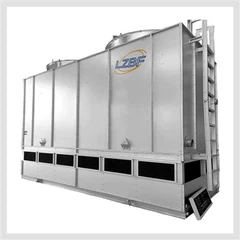
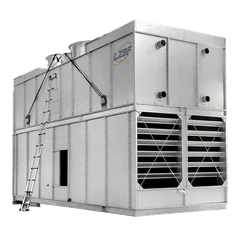
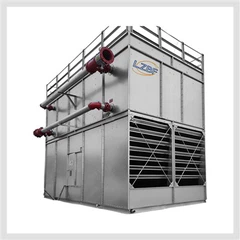
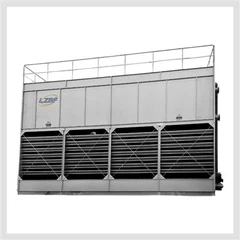
First off, let's talk a bit about what Indirect Evaporative Condensers are. They're a type of heat exchanger that uses the evaporation of water to cool a refrigerant. This process is super efficient and can save a ton of energy compared to traditional condensers.
One of the major environmental regulations that affects the use of Indirect Evaporative Condensers is related to water usage. Water is a precious resource, and many regions have strict rules about how much water industrial equipment can consume. Indirect Evaporative Condensers use water primarily for the evaporation process, which cools the refrigerant. However, we need to make sure that the water consumption is within the limits set by local authorities.
For example, in some arid regions, there are caps on the amount of water that can be used for industrial cooling. As a supplier, we work closely with our clients to ensure that our Indirect Evaporative Condensers are designed to be as water - efficient as possible. We use advanced technologies like water recycling systems. These systems collect the water that has been used in the evaporation process, treat it, and then reuse it. This not only helps our clients comply with water usage regulations but also saves them money in the long run.
Another important aspect is the use of refrigerants. Refrigerants play a crucial role in the operation of Indirect Evaporative Condensers. However, many traditional refrigerants, such as chlorofluorocarbons (CFCs) and hydrochlorofluorocarbons (HCFCs), have been found to be harmful to the ozone layer. The Montreal Protocol, an international environmental agreement, has phased out the production and use of many of these harmful refrigerants.
As a responsible supplier, we only use refrigerants that are in line with the latest environmental regulations. For instance, hydrofluorocarbons (HFCs) are currently widely used, but they also have a high global warming potential (GWP). So, we're constantly researching and developing systems that can use more environmentally friendly refrigerants with lower GWP, like natural refrigerants such as ammonia and carbon dioxide.
Air quality is also a concern when it comes to Indirect Evaporative Condensers. These condensers can emit small amounts of water vapor and, in some cases, chemicals from the refrigerants or water treatment agents. Local air quality regulations may limit the amount of pollutants that can be released into the atmosphere. We take this very seriously and design our condensers to minimize any potential air pollution. We use high - quality filters and treatment systems to ensure that the emissions from our Indirect Evaporative Condensers are well within the acceptable limits.


Noise pollution is yet another area where environmental regulations come into play. Industrial equipment can be noisy, and Indirect Evaporative Condensers are no exception. Many localities have noise level limits for industrial areas, especially those close to residential zones. We design our condensers with noise - reduction features. For example, we use quiet fans and vibration - dampening materials to keep the noise levels down. This way, our clients can operate their condensers without disturbing the surrounding community.
Now, let me tell you a bit about some of the products we offer. We have the Recold Evaporative Condenser. This condenser is known for its high efficiency and reliability. It's designed with the latest water - saving and environmental protection technologies, making it a great choice for clients who want to comply with strict environmental regulations.
Our Evaporative Surface Condenser is another excellent option. It has a unique design that maximizes the heat transfer process while minimizing water and energy consumption. And if you're looking for something a bit different, our Indirect Evaporative Cooler is a great alternative. It uses the principle of indirect evaporation to cool the air, providing an energy - efficient cooling solution.
If you're in the market for an Indirect Evaporative Condenser, whether you're a small business or a large industrial facility, we can help you find the perfect solution. We understand that every client has different needs and that compliance with environmental regulations is a top priority. Our team of experts will work with you from the initial consultation to the installation and after - sales service.
We'll help you choose the right condenser based on your specific requirements, local environmental regulations, and budget. We can also assist you in getting all the necessary permits and approvals for the installation of the equipment. And if you have any questions about environmental regulations or how our products can help you comply, we're just a call or an email away.
So, if you're interested in learning more about our Indirect Evaporative Condensers or want to start a procurement discussion, don't hesitate to reach out. We're here to make the process as smooth and hassle - free as possible for you.
References
- Montreal Protocol on Substances that Deplete the Ozone Layer
- Local water usage and air quality regulations in various regions
- Industry standards for noise pollution control in industrial equipment
Send Inquiry