


How to design a closed circuit cooling tower for specific applications?
Jan 16, 2026
Leave a message
Hey there! I'm a supplier of closed circuit cooling towers, and today I want to share some insights on how to design a closed circuit cooling tower for specific applications. Designing a proper cooling tower is crucial as it can save energy, reduce maintenance, and ensure the smooth running of various industrial processes. So, let's dive right in!
Understanding the Basics
Before we start designing, we need to understand what a closed circuit cooling tower is. In simple terms, it's a device that cools a fluid, usually water, by transferring heat from the fluid to the atmosphere. Unlike open cooling towers, the process fluid in a closed circuit system remains isolated from the outside environment, which helps prevent contamination.
Assessing the Specific Application
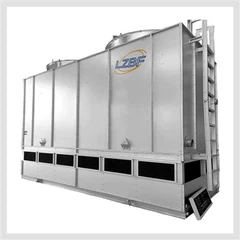
The first step in designing a closed circuit cooling tower is to assess the specific application. Different industries have different needs, and you gotta account for them. For example, in the smelting industry, the temperatures are extremely high, and the cooling tower has to be able to handle a large amount of heat. You can check out more about Closed-Circuit Cooling Tower For Smelting to see how it's tailored for such high - heat applications.
In a chemical plant, on the other hand, the process fluid might be corrosive. So, the materials used in the cooling tower need to be resistant to corrosion. You also need to consider the flow rate, temperature range, and the required cooling capacity.
Calculating the Cooling Load
Once you've understood the application, the next step is to calculate the cooling load. This is the amount of heat that the cooling tower needs to remove from the process fluid. You can calculate it using the formula:
[ Q = m\times c\times\Delta T]
where (Q) is the cooling load, (m) is the mass flow rate of the fluid, (c) is the specific heat capacity of the fluid, and (\Delta T) is the temperature difference between the inlet and outlet of the fluid.
Make sure to double - check your calculations, as an inaccurate cooling load calculation can lead to an undersized or oversized cooling tower, both of which can cause problems. An undersized tower won't be able to cool the fluid effectively, while an oversized tower will waste energy and cost more.
Selecting the Right Type of Closed Circuit Cooling Tower
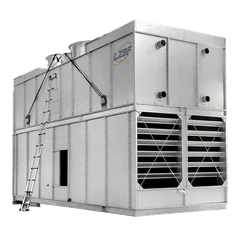
There are several types of closed circuit cooling towers out there. One common type is the Indirect Cooling Tower. In an indirect cooling tower, the process fluid is cooled indirectly by water sprayed on the outside of the heat exchanger tubes. This type is great for applications where the process fluid must be kept clean and free from contamination.
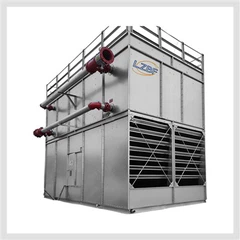
Another option is the Blower Closed Circuit Cooling Tower. These towers use blowers to force air through the tower, enhancing the cooling process. They are often used in applications where space is limited or where a higher cooling efficiency is required.


Choosing the Right Materials
The choice of materials is also super important. For the heat exchanger tubes, materials like stainless steel, copper, or aluminum are commonly used. Stainless steel is great for its corrosion resistance, making it suitable for applications with corrosive fluids. Copper has high thermal conductivity, which means it can transfer heat more efficiently. Aluminum is lightweight and relatively inexpensive, but it may not be as durable as stainless steel in some harsh environments.
The casing of the cooling tower can be made of fiberglass or galvanized steel. Fiberglass is corrosion - resistant and easy to maintain, while galvanized steel is strong and can withstand harsh weather conditions.
Designing the Water Distribution System
A good water distribution system is essential for the efficient operation of a closed circuit cooling tower. The water should be evenly distributed over the heat exchanger tubes to ensure maximum heat transfer. You can use nozzles or spray headers to distribute the water.
The water flow rate also needs to be carefully controlled. If the flow rate is too low, the heat transfer will be inefficient. If it's too high, it can cause excessive splashing and water loss.
Considering the Air Flow
Air flow is another critical factor in the design of a closed circuit cooling tower. The amount of air passing through the tower affects the cooling efficiency. You can use natural draft or mechanical draft to move the air.
Natural draft cooling towers rely on the buoyancy of hot air to create an upward flow of air. They are simple and have low operating costs but require a large amount of space. Mechanical draft cooling towers, on the other hand, use fans or blowers to force air through the tower. They are more compact and can provide a higher cooling capacity.
Incorporating Safety Features
Safety should always be a top priority. Make sure to include safety features such as emergency shut - off valves, pressure relief valves, and temperature sensors. These features can help prevent accidents and damage to the cooling tower and the surrounding equipment.
Maintenance Considerations
Designing a cooling tower that's easy to maintain is also important. Access points should be provided for inspection, cleaning, and repair. The location of the filters and pumps should be easily accessible. Also, consider using self - cleaning or easily replaceable components to reduce maintenance time and costs.
Monitoring and Control
Finally, a good monitoring and control system is necessary. You can use sensors to monitor the temperature, pressure, and flow rate of the fluid and the air. The data collected can be used to optimize the operation of the cooling tower and detect any potential problems early.
If you're interested in getting a closed circuit cooling tower designed for your specific application, don't hesitate to reach out. We're here to help you find the best solution for your needs and ensure that your cooling system runs smoothly and efficiently. Whether it's for a smelting plant, a chemical factory, or any other industry, we've got the expertise and the products to meet your requirements.
References
- Cooling Tower Institute. (20XX). Handbook of Cooling Tower Technology.
- ASHRAE. (20XX). HVAC Systems and Equipment Handbook.
Send Inquiry