


How does the water flow in a closed circuit cooling tower?
Oct 07, 2025
Leave a message
How does the water flow in a closed circuit cooling tower?
As a supplier of closed circuit cooling towers, I often get queries from customers about how the water flows within these systems. Understanding the water flow mechanism is crucial for optimizing the performance of closed circuit cooling towers and ensuring their efficient operation. In this blog post, I will delve into the details of how water moves through a closed circuit cooling tower, exploring the key components and processes involved.
The Basics of a Closed Circuit Cooling Tower
Before we dive into the water flow, let's briefly review the basic structure and function of a closed circuit cooling tower. A closed circuit cooling tower is a heat rejection device that uses a combination of air and water to cool a process fluid, typically water or a water-glycol mixture. The process fluid circulates through a closed loop of coils within the cooling tower, while a separate stream of water, known as the spray water, is used to cool the coils indirectly.
The main components of a closed circuit cooling tower include:
- Coils: These are the heat exchange surfaces where the process fluid releases heat to the spray water.
- Spray System: This consists of nozzles that distribute the spray water over the coils.
- Fill Material: The fill material provides a large surface area for the spray water to interact with the air, enhancing the evaporation process.
- Fan: The fan draws air through the cooling tower, facilitating the heat transfer and evaporation.
- Water Basin: The water basin collects the spray water after it has passed through the fill material and returns it to the spray system for reuse.
Water Flow in a Closed Circuit Cooling Tower
The water flow in a closed circuit cooling tower can be divided into two main loops: the process fluid loop and the spray water loop. Let's take a closer look at each loop and how they interact.
Process Fluid Loop
The process fluid, which is typically heated by a process such as a chiller or a heat exchanger, enters the closed circuit cooling tower through the inlet of the coils. As the process fluid flows through the coils, it transfers heat to the spray water on the outside of the coils. The cooled process fluid then exits the cooling tower through the outlet of the coils and returns to the process for reuse.
The process fluid loop is a closed loop, which means that the process fluid does not come into direct contact with the environment or the spray water. This prevents contamination of the process fluid and ensures its purity and integrity.


Spray Water Loop
The spray water loop is responsible for cooling the process fluid by absorbing heat from the coils. The spray water is pumped from the water basin to the spray system, where it is distributed over the coils through a series of nozzles. As the spray water comes into contact with the hot coils, it absorbs heat from the process fluid and evaporates.
The evaporated water is carried away by the air flowing through the cooling tower, while the remaining spray water falls through the fill material and collects in the water basin. The fill material provides a large surface area for the spray water to interact with the air, enhancing the evaporation process and increasing the cooling efficiency.
The spray water loop is an open loop, which means that the spray water is exposed to the environment and can absorb dust, dirt, and other contaminants. To prevent the buildup of contaminants in the spray water, a water treatment system is typically installed to remove impurities and maintain the quality of the spray water.
Interaction between the Two Loops
The process fluid loop and the spray water loop are interconnected through the coils, which act as the heat exchange surfaces. The heat transfer between the two loops occurs through conduction and convection. As the process fluid flows through the coils, it transfers heat to the coils through conduction. The spray water on the outside of the coils then absorbs the heat from the coils through convection and evaporates.
The efficiency of the heat transfer between the two loops depends on several factors, including the temperature difference between the process fluid and the spray water, the surface area of the coils, the flow rate of the process fluid and the spray water, and the properties of the fill material. By optimizing these factors, the cooling efficiency of the closed circuit cooling tower can be maximized.
Types of Closed Circuit Cooling Towers
There are several types of closed circuit cooling towers available on the market, each with its own unique design and water flow characteristics. Some of the common types of closed circuit cooling towers include:
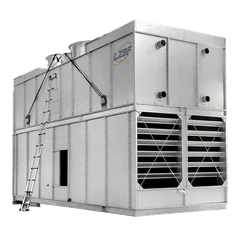
- Composite Flow Closed Cooling Tower: This type of cooling tower combines both counterflow and crossflow designs to achieve high cooling efficiency. The process fluid flows through the coils in a counterflow direction, while the spray water is distributed over the coils in a crossflow direction.
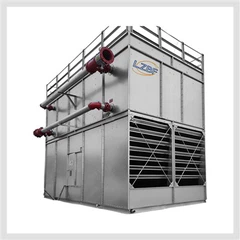
- Air and Shower Cross Closed Cooling Tower: This type of cooling tower uses a combination of air and spray water to cool the process fluid. The air is drawn through the cooling tower in a crossflow direction, while the spray water is distributed over the coils in a counterflow direction.
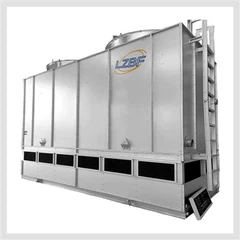
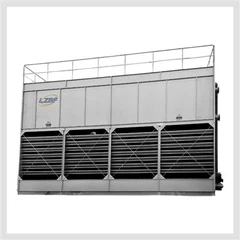
- Close Circuit Cooling Towers: This is a general term that refers to all types of closed circuit cooling towers. These cooling towers are designed to provide efficient cooling for a wide range of industrial and commercial applications.
Benefits of Closed Circuit Cooling Towers
Closed circuit cooling towers offer several benefits over traditional open circuit cooling towers, including:
- Reduced Water Consumption: Closed circuit cooling towers use a closed loop system, which means that the process fluid does not come into direct contact with the environment or the spray water. This reduces the amount of water lost through evaporation and drift, resulting in significant water savings.
- Improved Water Quality: The closed loop system also prevents contamination of the process fluid and the spray water, ensuring their purity and integrity. This reduces the need for water treatment chemicals and maintenance, resulting in lower operating costs.
- Enhanced Energy Efficiency: Closed circuit cooling towers are designed to provide efficient cooling with minimal energy consumption. The use of advanced heat exchange technologies and high-efficiency fans helps to reduce the power consumption of the cooling tower, resulting in lower energy costs.
- Lower Maintenance Requirements: The closed loop system and the use of high-quality components reduce the maintenance requirements of the cooling tower. This results in less downtime and lower maintenance costs.
Conclusion
In conclusion, understanding the water flow in a closed circuit cooling tower is essential for optimizing its performance and ensuring its efficient operation. By following the principles of heat transfer and evaporation, and by choosing the right type of cooling tower for your application, you can achieve significant energy savings, water savings, and maintenance savings.
If you are interested in learning more about closed circuit cooling towers or if you have any questions about our products and services, please do not hesitate to contact us. Our team of experts will be happy to assist you in selecting the right cooling tower for your application and providing you with the support and guidance you need to ensure its successful operation.
References
- ASHRAE Handbook - HVAC Systems and Equipment. American Society of Heating, Refrigerating and Air-Conditioning Engineers, Inc.
- Cooling Tower Institute. Cooling Tower Handbook.
- TEMA Standards. Tubular Exchanger Manufacturers Association, Inc.
Send Inquiry