


How does the design of the evaporation section impact the overall performance of an Indirect Evaporative Condenser?
Dec 01, 2025
Leave a message
Hey there! As a supplier of Indirect Evaporative Condensers, I've seen firsthand how crucial the design of the evaporation section is for the overall performance of these systems. In this blog, I'm gonna break down how different aspects of the evaporation section design can make or break the efficiency and effectiveness of an Indirect Evaporative Condenser.
Let's start with the basics. An Indirect Evaporative Condenser works by using the principle of evaporation to remove heat from a refrigerant. The evaporation section is where the magic happens - it's where water evaporates, absorbing heat from the refrigerant in the process. This cools down the refrigerant, allowing it to condense back into a liquid state.
One of the key factors in the design of the evaporation section is the surface area available for evaporation. The more surface area there is, the more water can evaporate, and the more heat can be removed. That's why many modern Indirect Evaporative Condensers use finned tubes or other types of extended surfaces in the evaporation section. These fins increase the surface area without taking up too much extra space, making the condenser more efficient.
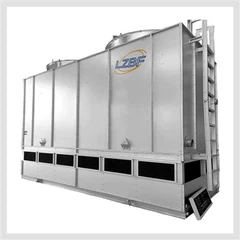
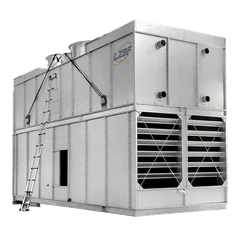
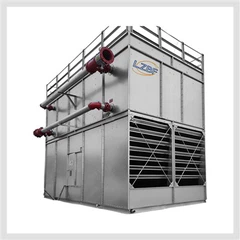
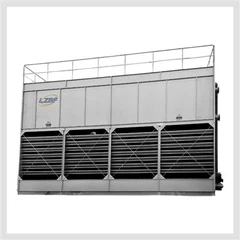
For example, if you take a look at an Evaporative Type Condenser, you'll notice that it often has a series of fins on the tubes in the evaporation section. These fins provide a larger area for the water to spread out and evaporate, which helps to improve the heat transfer rate. This means that the condenser can cool the refrigerant more quickly and effectively, leading to better overall performance.
Another important aspect of the evaporation section design is the distribution of water. If the water isn't distributed evenly across the evaporation surface, some areas may not get enough water, while others may be flooded. This can lead to uneven evaporation and reduced efficiency. To solve this problem, many Indirect Evaporative Condensers use specialized water distribution systems.
These systems can include spray nozzles, drip pans, or other devices that ensure the water is spread evenly over the evaporation surface. By ensuring that every part of the evaporation section gets enough water, these systems help to maximize the evaporation rate and improve the performance of the condenser. You can learn more about this in the context of an Evaporative Type Of Condenser.
The material used in the evaporation section also plays a big role in the performance of the condenser. Different materials have different thermal conductivity and corrosion resistance properties, which can affect how well the condenser works and how long it lasts. For example, copper is a popular choice for the tubes in the evaporation section because it has high thermal conductivity, which means it can transfer heat quickly. However, copper can be expensive and may corrode over time, especially in harsh environments.
On the other hand, some condensers use aluminum or stainless steel in the evaporation section. Aluminum is lightweight and relatively inexpensive, but it has lower thermal conductivity than copper. Stainless steel, on the other hand, is highly corrosion-resistant, but it can be more expensive and may not transfer heat as well as copper. The choice of material depends on a variety of factors, including the cost, the operating environment, and the specific performance requirements of the condenser.
The airflow through the evaporation section is another critical factor. Adequate airflow is necessary to carry away the water vapor that is produced during evaporation. If the airflow is too low, the water vapor will build up around the evaporation surface, reducing the evaporation rate. On the other hand, if the airflow is too high, it may cause the water to be blown off the evaporation surface before it has a chance to evaporate.
To optimize the airflow, many Indirect Evaporative Condensers use fans or blowers to control the speed and direction of the air. These fans can be adjusted to provide the right amount of airflow for different operating conditions. In an Evaporative Condenser Cooling Tower, for example, the fans are carefully designed to ensure that the air flows evenly through the evaporation section, maximizing the evaporation rate and improving the overall performance of the condenser.
The design of the evaporation section also affects the maintenance requirements of the Indirect Evaporative Condenser. A well-designed evaporation section should be easy to clean and maintain. For example, if the evaporation section has a lot of small, hard-to-reach spaces, it can be difficult to remove dirt and debris, which can reduce the efficiency of the condenser over time.
On the other hand, a simple and accessible design makes it easier to perform regular maintenance tasks, such as cleaning the tubes and checking the water distribution system. This helps to keep the condenser running smoothly and extends its lifespan.


In addition to these technical aspects, the design of the evaporation section can also have an impact on the energy efficiency of the Indirect Evaporative Condenser. By optimizing the surface area, water distribution, material selection, and airflow, a well-designed evaporation section can reduce the amount of energy required to operate the condenser. This not only saves money on energy costs but also makes the condenser more environmentally friendly.
So, as you can see, the design of the evaporation section is a critical factor in the overall performance of an Indirect Evaporative Condenser. Whether you're looking for a high-efficiency condenser for a large industrial application or a more compact unit for a small commercial building, choosing a condenser with a well-designed evaporation section is essential.
If you're in the market for an Indirect Evaporative Condenser and want to learn more about how the design of the evaporation section can impact its performance, feel free to reach out. We're here to help you find the right solution for your specific needs and ensure that you get the best possible performance from your condenser. Let's start a conversation about your requirements and see how we can work together to make your project a success.
References
- Various industry reports on evaporative condenser technology
- Technical manuals from leading evaporative condenser manufacturers
Send Inquiry