


Can an indirect cooler be used for industrial purposes?
Oct 16, 2025
Leave a message
Yo, what's up everyone! I'm a supplier of indirect coolers, and today I wanna have a chat about whether an indirect cooler can be used for industrial purposes. It's a question that comes up a lot, and I'm here to break it down for you.
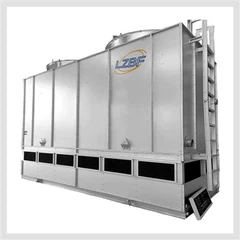
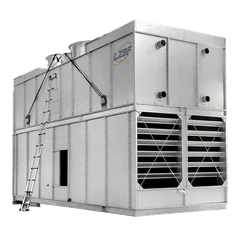
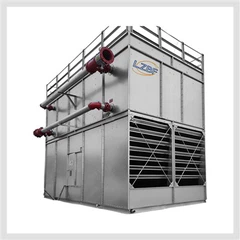
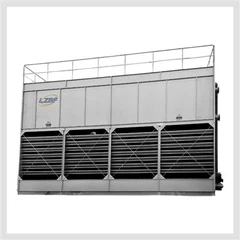
First off, let's talk about what an indirect cooler is. An indirect cooler is a type of cooling system that uses a heat exchanger to transfer heat from the hot fluid (usually air or water) to a secondary fluid (usually water or a refrigerant). The secondary fluid then dissipates the heat to the environment through an evaporative process or a mechanical cooling system. This process allows for efficient cooling without direct contact between the hot fluid and the cooling medium, which can be a big advantage in certain industrial applications.
One of the main advantages of using an indirect cooler for industrial purposes is its energy efficiency. Compared to traditional cooling systems, indirect coolers can use up to 50% less energy, which can result in significant cost savings over time. This is because indirect coolers use the evaporative cooling effect to reduce the temperature of the secondary fluid, which in turn reduces the amount of energy needed to cool the hot fluid. Additionally, indirect coolers can operate at a lower temperature than traditional cooling systems, which can further improve their energy efficiency.
Another advantage of using an indirect cooler for industrial purposes is its ability to provide precise temperature control. In many industrial processes, maintaining a specific temperature is critical for the quality and efficiency of the process. Indirect coolers can be designed to provide precise temperature control within a narrow range, which can help to ensure that the industrial process operates at its optimal level. This can be particularly important in industries such as food and beverage, pharmaceuticals, and electronics, where even small variations in temperature can have a significant impact on the quality of the product.


In addition to energy efficiency and precise temperature control, indirect coolers also offer a number of other benefits for industrial applications. For example, indirect coolers can be designed to operate in a wide range of environmental conditions, including high humidity and high temperatures. This makes them suitable for use in a variety of industrial settings, including factories, power plants, and data centers. Additionally, indirect coolers can be designed to be compact and modular, which makes them easy to install and maintain.
Now, let's talk about some of the specific industrial applications where indirect coolers can be used. One of the most common applications for indirect coolers is in the cooling of industrial equipment, such as motors, generators, and transformers. These types of equipment generate a lot of heat during operation, and if the heat is not removed efficiently, it can cause damage to the equipment and reduce its lifespan. Indirect coolers can be used to cool the equipment by transferring the heat to a secondary fluid, which can then be dissipated to the environment.
Another common application for indirect coolers is in the cooling of industrial processes, such as chemical reactions, distillation, and crystallization. These types of processes often require precise temperature control to ensure the quality and efficiency of the process. Indirect coolers can be used to provide the necessary cooling by transferring the heat from the process to a secondary fluid, which can then be cooled using an evaporative or mechanical cooling system.
Indirect coolers can also be used in the cooling of industrial buildings, such as factories, warehouses, and offices. These types of buildings often have high heat loads due to the presence of equipment, machinery, and people. Indirect coolers can be used to cool the building by transferring the heat from the indoor air to a secondary fluid, which can then be dissipated to the environment. This can help to improve the comfort of the occupants and reduce the energy consumption of the building.
So, as you can see, there are many reasons why an indirect cooler can be a great choice for industrial purposes. But, of course, like any other technology, there are also some limitations and considerations to keep in mind. For example, indirect coolers can be more expensive to install and maintain than traditional cooling systems. Additionally, indirect coolers require a source of water or a refrigerant to operate, which can be a challenge in some industrial settings.
If you're considering using an indirect cooler for your industrial application, it's important to work with a reputable supplier who can help you to design and install the system. At our company, we have extensive experience in designing and installing indirect coolers for a variety of industrial applications. We can help you to determine the best type of indirect cooler for your specific needs, and we can provide you with a comprehensive installation and maintenance service.
If you're interested in learning more about how an indirect cooler can benefit your industrial application, please don't hesitate to contact us. We'd be happy to answer any questions you may have and to provide you with a free consultation. You can also check out our website for more information about our Closed Loop Water Cooling System, Indirect Direct Evaporative Cooling Unit, and Indirect Evaporative Air Cooler.
In conclusion, an indirect cooler can be a great choice for industrial purposes. It offers many advantages, including energy efficiency, precise temperature control, and the ability to operate in a wide range of environmental conditions. If you're looking for a reliable and efficient cooling solution for your industrial application, I highly recommend considering an indirect cooler. Contact us today to learn more!
References:
- ASHRAE Handbook - HVAC Systems and Equipment
- Cooling Tower Institute Standards
- Industrial Refrigeration Handbook
Send Inquiry