


Are there any government incentives for using evaporative cooled condensers?
Oct 15, 2025
Leave a message
In the ever - evolving landscape of industrial and commercial cooling solutions, evaporative cooled condensers have emerged as a game - changer. As a supplier of evaporative cooled condensers, I am often asked about government incentives for using these innovative systems. This blog post aims to explore whether there are indeed government incentives for adopting evaporative cooled condensers and how they can benefit businesses.
The Significance of Evaporative Cooled Condensers
Before delving into government incentives, it's essential to understand why evaporative cooled condensers are gaining popularity. These condensers work on the principle of evaporative cooling, where water is used to dissipate heat from the refrigerant. This process is highly efficient compared to traditional air - cooled condensers, as the latent heat of vaporization of water allows for greater heat transfer at lower energy consumption.
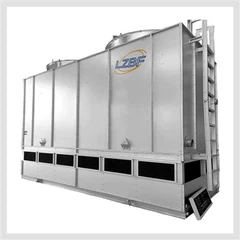
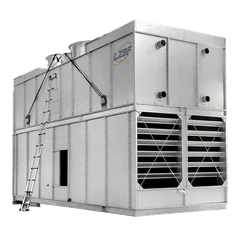
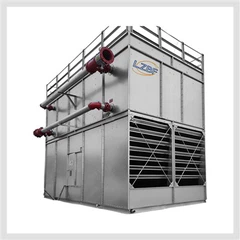
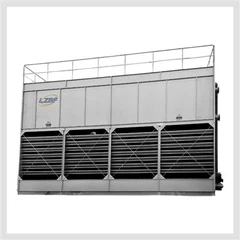
Evaporative cooled condensers come in various forms, such as Indirect Evaporative Cooler, Evaporative Type Condenser, and Evaporative Condensing Unit. Each type has its own set of advantages and is suitable for different applications, ranging from small - scale commercial refrigeration to large - scale industrial processes.
Energy Efficiency and Environmental Benefits
One of the primary reasons governments may offer incentives for using evaporative cooled condensers is their energy - saving potential. In an era where energy conservation is a global priority, these condensers can significantly reduce electricity consumption. By using water as a cooling medium, they can achieve higher heat transfer rates with less power input compared to air - cooled systems. This not only lowers the operating costs for businesses but also reduces the overall demand for electricity from the grid.
In addition to energy efficiency, evaporative cooled condensers are more environmentally friendly. They use less refrigerant, which is often a potent greenhouse gas. Moreover, the reduced energy consumption means fewer carbon emissions associated with power generation. As governments around the world strive to meet their climate change targets, promoting the use of energy - efficient and environmentally friendly technologies like evaporative cooled condensers becomes a strategic priority.
Government Incentives: A Global Perspective
The availability of government incentives for using evaporative cooled condensers varies from country to country and region to region. In some areas, governments offer tax credits, grants, or subsidies to businesses that invest in energy - efficient equipment, including evaporative cooled condensers.


Tax Credits
Tax credits are a common form of incentive. For example, in the United States, the federal government has offered tax credits for businesses that install energy - efficient HVAC (Heating, Ventilation, and Air Conditioning) equipment. Although the specific details may change over time, these credits can significantly offset the initial investment cost of purchasing and installing evaporative cooled condensers. State and local governments may also offer additional tax incentives, making the overall financial benefit even more attractive.
Grants and Subsidies
Some governments provide grants or subsidies to encourage the adoption of clean technologies. These funds can be used to cover a portion of the purchase price, installation costs, or even research and development expenses related to evaporative cooled condensers. In Europe, for instance, the European Union's Horizon 2020 program has funded projects aimed at promoting energy - efficient cooling technologies. Local governments in some European countries also offer their own grant programs to support businesses in upgrading their cooling systems.
Rebate Programs
Rebate programs are another way governments incentivize the use of energy - efficient equipment. Utility companies, often in collaboration with government agencies, offer rebates to customers who replace their old, inefficient cooling systems with new, energy - efficient ones. These rebates can range from a few hundred dollars to several thousand dollars, depending on the size and efficiency of the evaporative cooled condenser.
Case Studies: Real - World Examples
To illustrate the impact of government incentives, let's look at a few case studies.
Case Study 1: A Small - Scale Commercial Refrigeration Business in California
A small - scale commercial refrigeration business in California decided to upgrade its old air - cooled condenser to an evaporative cooled condenser. The business was eligible for a state - level rebate program, which covered 30% of the purchase and installation costs. In addition, the federal government's tax credit further reduced the overall cost. As a result, the business was able to recoup its investment in less than two years through energy savings. The new evaporative cooled condenser also improved the reliability of the refrigeration system, reducing maintenance costs and downtime.
Case Study 2: An Industrial Manufacturing Plant in Germany
An industrial manufacturing plant in Germany received a grant from the local government to install an evaporative condensing unit. The grant covered 50% of the total project cost. The plant was able to reduce its energy consumption by 40% after the installation, leading to significant cost savings. The environmental benefits were also substantial, as the reduced energy consumption translated into lower carbon emissions. The success of this project has inspired other businesses in the region to consider similar upgrades.
How to Access Government Incentives
If you are considering purchasing an evaporative cooled condenser and want to take advantage of government incentives, here are some steps you can take:
- Research Local Incentives: Start by researching the incentives available in your area. Check with your local government agencies, utility companies, and industry associations. They can provide you with detailed information about tax credits, grants, subsidies, and rebate programs.
- Consult with an Expert: As a supplier of evaporative cooled condensers, I can offer guidance on the types of systems that are eligible for incentives. I can also help you understand the specific requirements and application processes for each incentive program.
- Keep Documentation: When applying for incentives, it's important to keep detailed documentation of your purchase, installation, and energy savings. This includes invoices, equipment specifications, and energy consumption data. Proper documentation will ensure that you can claim the incentives accurately and avoid any potential issues.
Conclusion
In conclusion, there are indeed government incentives available in many parts of the world for using evaporative cooled condensers. These incentives, in the form of tax credits, grants, subsidies, and rebate programs, can significantly reduce the financial burden of purchasing and installing these energy - efficient systems. Moreover, the energy savings and environmental benefits associated with evaporative cooled condensers make them a smart choice for businesses in the long run.
If you are interested in learning more about evaporative cooled condensers or exploring the available government incentives, I encourage you to reach out. Our team of experts can provide you with detailed information, help you select the right system for your needs, and assist you in accessing the incentives. Contact us today to start the conversation about upgrading your cooling system and reaping the benefits of evaporative cooled condensers.
References
- U.S. Department of Energy. Energy Efficiency and Renewable Energy. (Website provides information on federal energy - efficiency incentives)
- European Union. Horizon 2020. (Details about EU - funded projects related to clean technologies)
- Local government websites in various regions for information on regional incentives.
Send Inquiry