


Oasis Bingfeng's Solutions For Cooling Challenges in Crystal Pulling/Extrusion Molding Processes
Mar 11, 2026
Leave a message
Oasis Bingfeng's Solutions for Cooling Challenges in Crystal Pulling/Extrusion Molding Processes
Pain Point Review: Why is Cooling Water Temperature Stability So Critical?
In the processes of semiconductor monocrystalline silicon pulling, photovoltaic silicon wafer production, and specialty engineering plastic extrusion, even minor fluctuations in cooling water temperature directly impact product quality:
Increased Crystal Defects:
Temperature fluctuations cause lattice misalignment, affecting electrical performance.
Reduced Mechanical Strength:
Polymer chains fail to arrange in an orderly manner, decreasing material toughness.
Poor Product Consistency:
Significant performance variations between batches make it difficult to ensure high yield rates.

Oasis Bingfeng's Solution: A Triple-Precision Temperature Control System
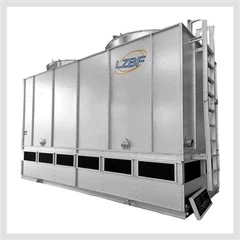
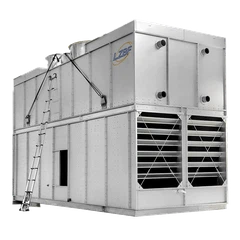
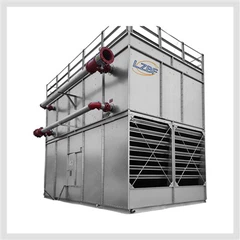
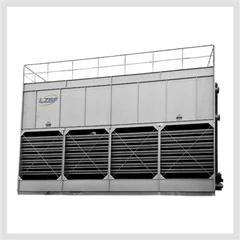
To meet the stringent cooling water temperature requirements of crystal pulling and extrusion molding processes, Oasis Bingfeng closed-circuit cooling towers offer an integrated "Equipment + Control + Process" solution:
Solution 1: High-Precision Heat Exchange System - Ensuring Temperature Stability from the Source
Technical Approaches:
•Utilizing high-efficiency heat exchange coils (available in 304 stainless steel or copper), offering a high heat transfer coefficient and rapid response speed.
• Combined Flow Design: Integrating the advantages of counterflow and crossflow to achieve more uniform heat exchange in limited spaces.
• Optimized Coil Arrangement: Increasing heat transfer area per unit volume to reduce water temperature fluctuations.
Value to Customers:
• More precise control of inlet/outlet temperature differences, providing a stable foundation for downstream control systems.
• 15% to 20% higher heat exchange efficiency, achieving lower outlet water temperatures under the same conditions.
Solution 2: Intelligent Temperature Control System - Real-Time Load Response
Technical Approaches:
• PID Intelligent Control Algorithm: Monitors outlet temperature in real time, precisely adjusting fan speed and spray water volume.
• Variable Frequency Technology: Automatically adjusts operating power based on actual thermal load, preventing overcooling or overheating.
• Multi-Point Temperature Monitoring: Sensors installed at key positions create a closed-loop control system.
Value to Customers:
• Outlet temperature fluctuation controlled within ±1°C, meeting the strict stability requirements of crystal pulling processes.
• Prevents crystal defects caused by temperature fluctuations, improving product yield.
• Measured data shows: after adopting intelligent control, a photovoltaic company increased silicon wafer yield by approximately 3.5%.
Solution 3: Process-Adaptive Design - Customized Optimization for Specific Materials
Technical Approaches:
• Preset Process Parameters: Optimized operating curves based on cooling characteristics of different materials (monocrystalline silicon, polycrystalline silicon, engineering plastics, etc.).
• Fast Response Mode: Enhanced system response speed for frequent start-stop cycles in extrusion processes.
• Constant Temperature Assurance Function: Maintains set temperature even during low-load or nighttime operation.
Value to Customers:
• Significantly improved product quality consistency across different batches.
• Reduced process adjustment time caused by temperature fluctuations.
• Extended service life of molds and heating elements.

Actual Case Study: Cooling Retrofit for a Photovoltaic Company's Monocrystalline Silicon Pulling Process
Customer Pain Points:
• The original cooling system experienced water temperature fluctuations of up to ±3°C during summer high-temperature periods, leading to increased dislocation density in monocrystalline silicon.
• Yield rates fluctuated significantly, undermining competitiveness in the high-end market.
Oasis Bingfeng's Solution:
• Configured a counterflow closed-circuit cooling tower (compact structure, high heat exchange efficiency).
• Equipped with an intelligent variable frequency control system, achieving precision of ±0.8°C.
• Utilized 304 stainless steel coils to eliminate water quality contamination.
Implementation Results:
• Water temperature fluctuations controlled within ±1°C, reducing crystal defect rates by approximately 28%.
• Single-furnace output increased by 12%.
• Annual water savings exceeded 15,000 tons, with electricity costs reduced by approximately 18%.
Send Inquiry