


How Is Hydraulic Oil Cooled? How Does The Oasis Bingfeng Direct Cooling Method Significantly Boost Efficiency?
Mar 31, 2026
Leave a message
How is hydraulic oil cooled?
During hydraulic system operation, hydraulic oil generates significant heat due to high-pressure flow and mechanical friction. Excessive oil temperature can lead to decreased viscosity, aging seals, increased system leakage, and even equipment failure. Therefore, hydraulic oil requires continuous and stable cooling to maintain normal system operating temperatures.
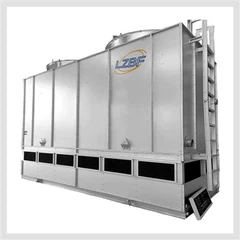
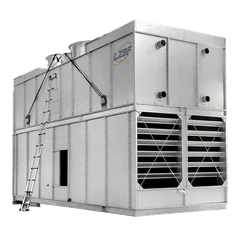
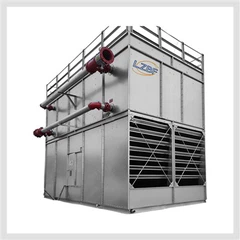
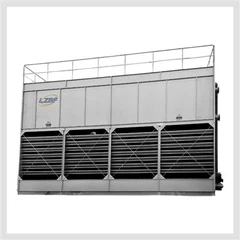
Step 1: High-temperature hydraulic oil enters the closed-circuit cooling tower
During operation, hydraulic oil heats up due to high-pressure flow and friction (typically reaching 60-80°C or higher). The high-temperature oil flows from the tank or main return line and is pressurized by an oil pump before being sent directly to the inlet of the closed-circuit cooling tower's heat exchange coil.
At this stage, the coil contains pure hydraulic oil, not cooling water. The coil material is typically 304 or 316 stainless steel to ensure compatibility with the hydraulic oil and corrosion resistance.
Step 2: Dual heat dissipation inside the tower (core process)
Once the hydraulic oil enters the coil, the closed-circuit cooling tower begins its cooling function, relying on two systems working together:
1. Spray water system
Water from the basin at the bottom of the tower is pumped to the spray piping above the coil and continuously sprayed over the outer surface of the coil through evenly distributed nozzles, like rain. The spray water contacts the hot coil wall and absorbs heat transferred from the hydraulic oil inside.

2. Fan ventilation system
The fan at the top of the tower starts simultaneously, drawing a large volume of ambient air from the lower or side sections of the tower. The air flows across the coil surface from bottom to top (or horizontally). The airflow not only directly removes heat from the coil surface but also accelerates the evaporation of the spray water. As water evaporates, it absorbs a large amount of latent heat, which is the most efficient part of the cooling process.
Heat transfer path: Hydraulic oil (inside coil) → Coil wall → Spray water film → Air (exhausted by fan)

Step 3: Cooled hydraulic oil returns to the system
After flowing through the coil and undergoing dual external cooling, the hydraulic oil temperature is significantly reduced (typically to a suitable operating temperature of 40-55°C). The cooled oil exits the coil outlet and returns directly to the tank or the main hydraulic circuit, continuing to participate in equipment operation, forming a complete cooling cycle

Step 4: Spray water circulation and replenishment
After absorbing heat, some of the spray water evaporates, while the remainder falls back into the basin, is pumped up again, and reused in a continuous cycle. The basin is equipped with an automatic makeup valve that adds fresh water when the water level drops, ensuring continuous and stable operation of the spray system.

Core Advantages of Oasis Bingfeng's Direct Cooling Method
The direct cooling method used in Oasis Bingfeng closed-circuit cooling towers for hydraulic oil (hydraulic oil directly entering the tower's coil) offers the following unique advantages compared to indirect cooling or other traditional cooling solutions:
1. Highest heat exchange efficiency, faster cooling speed
Core principle of direct cooling:
Hydraulic oil flows directly through the cooling tower's heat exchange coil, and heat is transferred directly through the coil wall to the spray water and air, with no intermediate medium heat loss.
Eliminates intermediate steps:
No need for secondary heat exchange through an oil-water heat exchanger, avoiding heat loss from intermediate steps.
Shortest heat transfer path:
Oil → Coil wall → Spray water/Air, the shortest path, most direct response.
Improved heat exchange efficiency:
15-20% higher compared to indirect cooling.
Customer value:
Faster oil temperature drop under the same conditions, more timely system response, and hydraulic equipment reaches stable operating state more quickly.
2. More compact system, smaller footprint
Direct cooling eliminates the oil-water heat exchanger and separate cooling water pump set required in indirect cooling solutions, significantly simplifying the system structure:
Fewer components:
No need for additional plate heat exchangers, cooling water circulation pumps, or associated piping.
Space-saving:
Overall system footprint reduced by approximately 30-40%.
Simpler installation:
Piping connections are simpler, shortening installation time.
Customer value:
Direct cooling is an ideal choice for workshops with limited space and high equipment density.

3. Lower investment cost, higher cost-effectiveness
By eliminating intermediate heat exchange equipment and associated piping, direct cooling solutions significantly reduce initial investment:
Equipment procurement cost:
No need to purchase oil-water heat exchangers, cooling water circulation pumps, or associated valves and instruments.
Installation cost:
Fewer pipes, fewer welds, lower installation labor and material costs.
Maintenance cost:
Fewer components, fewer failure points, reduced daily maintenance workload.
Customer value:
A die-casting enterprise saved approximately 25% in initial investment using a direct cooling solution compared to indirect cooling, with lower maintenance requirements.
4. Faster response speed, more precise temperature control
With direct cooling, the cooling system acts directly on the hydraulic oil itself, not via water as an intermediate medium:
Lower thermal inertia:
No intermediate cooling water loop, reducing temperature regulation response time by approximately 30-50%.
More direct control:
The intelligent temperature control system monitors oil temperature directly, adjusting cooling capacity in real time.
Smaller fluctuations:
Eliminates temperature lag from the intermediate water loop, resulting in a narrower oil temperature fluctuation range.
Customer value:
For hydraulic systems with frequent starts/stops and significant load variations, direct cooling responds faster, keeping oil temperature consistently within the optimal operating range.
5. Completely eliminates the risk of water-oil mixing
In indirect cooling solutions, the oil-water heat exchanger poses a potential leakage risk. If the heat exchanger is damaged, cooling water can enter the hydraulic oil, causing severe consequences:
Emulsification and degradation of hydraulic oil
Rust and corrosion of valve blocks and pump bodies
System failure and production shutdown
Advantages of direct cooling solution:
Hydraulic oil operates entirely within the closed-circuit cooling tower's coil, which is fully welded and undergoes strict pressure testing before leaving the factory.
Even if spray water contacts the outside of the coil, it only serves to dissipate heat - water and oil never mix.
Completely eliminates safety hazards associated with oil-water heat exchanger leaks.
Customer value:
Safer hydraulic system operation, longer oil life, and avoidance of high repair costs due to contamination.

6. Oasis Bingfeng's exclusive technical guarantees for direct cooling
To ensure the safe and efficient operation of the direct cooling method, Oasis Bingfeng provides the following exclusive technical guarantees:
1. High-quality coil materials
304/316 stainless steel coils, highly compatible with all types of hydraulic oil.
Fully welded construction, leak-free.
Corrosion-resistant, service life of over 10 years.
2. Intelligent temperature control system
Real-time oil temperature monitoring with ±1°C accuracy.
Automatically adjusts fan speed and spray volume to precisely match the load.
Presettable oil temperature range with over-temperature auto-alarm.
3. Oil-fouling prevention design
Optimized coil surface treatment to reduce oil-fouling adhesion.
Uniform water distribution from spray system to flush the outer coil surface.
Configurable cleaning cycles to extend maintenance intervals.
4. Multiple safety protections
Automatic shutdown protection for oil over-temperature.
Real-time coil pressure monitoring with abnormal condition alarms.
Emergency mode during power outages to maintain basic heat dissipation.

Send Inquiry