

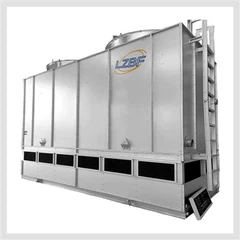
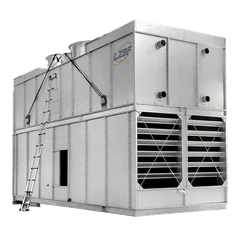
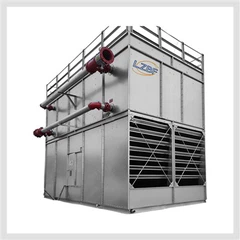
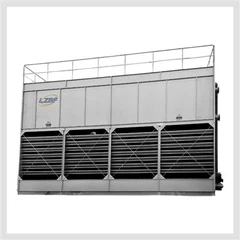

Evaporative Condenser Design Concept: A Fusion Of Efficiency, Energy Saving, And Sustainability
Jun 11, 2025
Leave a message
As a key component in modern refrigeration and air-conditioning systems, the evaporative condenser's design philosophy revolves around three core elements: efficient heat exchange, energy conservation, and environmental friendliness. In industrial refrigeration, commercial air conditioning, and food processing, evaporative condensers have achieved breakthrough optimization of traditional condensing technology through innovative structural design and intelligent control strategies. Their design focuses not only on improving the performance of the equipment itself but also on resource consumption and ecological impact throughout its entire lifecycle, embodying the deep integration of modern engineering technology and the concept of sustainable development.
Maximizing Heat Exchange Efficiency: A Breakthrough from Theory to Practice
The core function of an evaporative condenser is to remove heat from the refrigerant through the latent heat of water evaporation. This process relies on a three-phase, gas-liquid-solid, synergistic heat exchange mechanism. The heat transfer efficiency is directly influenced by the material and arrangement of the heat exchange tube bundle. Corrosion-resistant copper or stainless steel tubes are typically used, with spiral fins or elliptical tube structures used to increase the heat transfer area. Furthermore, coordinated control of the fan and spray system ensures uniform air flow and water film distribution, preventing localized overheating and scaling. Modern designs incorporate microchannel heat exchange technology. By reducing the diameter of the pipes (0.5-2mm), the heat exchange area per unit volume is significantly increased, lowering the condensing temperature by 5-10°C compared to traditional air- or water-cooled systems and significantly reducing compressor power consumption.
To further optimize efficiency, designers employ counterflow airflow: spray water flows downward, forming a water film that interacts with the dry, hot air entering from the bottom in the opposite direction. This design prolongs the contact time between the refrigerant vapor and the cooling medium. It also leverages the dual effects of water evaporation (which absorbs approximately 2260 kJ of heat per kilogram of water evaporated) and sensible heat transfer from the air, increasing heat exchange efficiency to 1.5-2 times that of traditional condensers. Some high-end models also incorporate a heat pipe pre-cooling module, which uses phase change materials to pre-cool the refrigerant temperature, further reducing the load on the evaporator.
Energy Saving and Consumption Reduction: Optimization from Single Device to Integrated System
The energy-saving design of the evaporative condenser incorporates comprehensive management of the "water, electricity, and gas" elements. In terms of water recycling, the water collection tray and filtration system recycles over 90% of the spray water. Automatic water replenishment maintains a balanced water level, and water softening modules (such as electronic descaling devices or chemical dosing systems) inhibit scale formation, resulting in a comprehensive water utilization rate that is over three times higher than traditional open-type cooling towers. Regarding power consumption, the widespread use of variable-frequency fans and pumps is crucial. Pressure sensors monitor condensing pressure in real time, dynamically adjusting fan speed (typically within a range of 30%-100%) and pump flow, avoiding the energy waste of "constant full-load operation" and potentially saving 20%-40% in partial-load conditions.
More advanced designs integrate evaporative condensers into building energy management systems (BEMS), enabling coordinated control with refrigeration units, cooling towers, and other equipment. For example, during transitional seasons, these systems utilize the natural cooling source of low-temperature outdoor air to automatically switch to "fan-only" mode, shutting down the sprinkler system. Alternatively, machine learning algorithms can predict load fluctuations and proactively adjust equipment parameters to achieve "demand-based" power allocation. This system-level optimization reduces overall energy consumption by 15%-25% compared to traditional stand-alone condensing solutions, making it particularly suitable for continuous operation scenarios such as large data centers and industrial parks.
Environmental Friendliness and Sustainability: From Materials to Lifecycle Responsibility
Modern evaporative condensers are designed with environmental protection in mind at every stage. Material selection prioritizes recyclability and low environmental impact: Heat exchange tubes utilize lead-free copper alloy or 316L stainless steel to reduce heavy metal contamination, while the outer casing utilizes galvanized steel or fiberglass reinforced plastic (FRP) instead of energy-intensive aluminum alloy. The water spray system is equipped with automatic pH monitoring and sterilization modules (such as UV disinfection or ozone generators) to prevent microbial growth, which can lead to equipment corrosion and water quality deterioration. Noise reduction is achieved by optimizing the fan blade shape (using swept or serrated edge designs) and installing a sound-absorbing deflector, keeping operating noise below 65dB(A), meeting the requirements of sensitive urban areas.
In terms of lifecycle management, designers prioritize maintainability and modular design. Key components (such as the fan motor, water pump, and electrical control box) feature quick-release structures for easy on-site replacement. Heat exchanger tube bundles are manufactured in standard lengths, requiring only partial replacement rather than the entire unit in the event of damage, reducing repair costs and resource waste. Some manufacturers have also introduced "carbon footprint labels" that disclose carbon emissions data from the equipment's production to disposal. They also provide waste heat recovery interfaces (such as hot water system connections) to convert heat released during the condensation process into building heating or energy for production processes, further extending their environmental value.
Future Directions: Extending Intelligent and Scenario-Based Design
With the penetration of the Internet of Things (IoT) and digital twin technology, evaporative condenser design is entering a new era of intelligent and adaptive design. By integrating multi-parameter sensors such as pressure, temperature, and flow into the equipment, coupled with edge computing gateways to upload real-time data to a cloud platform, operations and maintenance personnel can remotely monitor operating status, predict faults (such as tube scaling or fan bearing wear), and automatically optimize control strategies through algorithms. Some experimental models have experimented with integrating photovoltaic power modules or surplus pressure power generation devices, utilizing their own mechanical energy or solar power to supplement some of their electricity needs, furthering the exploration of "zero-carbon condensing" technology.
Scenario-specific design is also a key trend: For high-temperature and high-humidity regions (such as Southeast Asia), enhanced dehumidification units are being developed, reducing air humidity by adding pre-cooling coils. For extremely cold regions (such as northern industrial areas), anti-freeze spray systems are being designed, using ethylene glycol mixtures or electric heating pipes to prevent freezing in winter. For mobile applications (such as emergency refrigeration vehicles), compact containerized evaporative condensing units are being introduced, featuring integrated quick-connect interfaces and adaptive control systems. These differentiated designs enable evaporative condensers to precisely meet the needs of diverse environments and industries, expanding their application potential.
The design concept of evaporative condensers is essentially a collaborative innovation between engineering technology and natural laws-exploiting energy potential through efficient heat exchange mechanisms, reducing resource consumption through recycling, and achieving precise adaptation through intelligent control. From traditional manufacturing to green buildings, from data centers to new energy industries, this equipment that combines high efficiency, economy and ecology is becoming the core carrier for promoting the low-carbon transformation of the refrigeration industry, and also provides solid technical support for the realization of global sustainable development goals.
Send Inquiry