

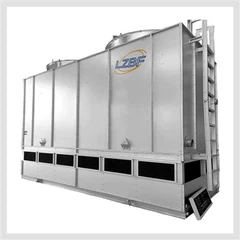
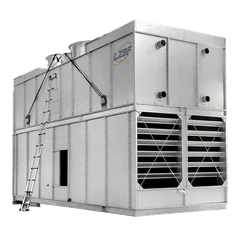
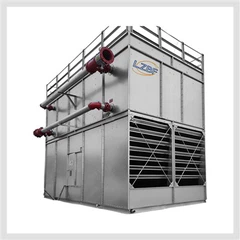
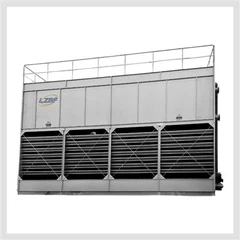

Complete Analysis Of The Cooling Process in Oasis Bingfeng's Hybrid Flow Dual-Inlet Closed-Circuit Cooling Tower
Nov 19, 2025
Leave a message
Complete Analysis of the Cooling Process in Oasis Bingfeng's Hybrid Flow Dual-Inlet Closed-Circuit Cooling Tower
The cooling process of Oasis Bingfeng's hybrid flow dual-inlet closed-circuit cooling tower represents a sophisticated thermodynamic engineering achievement. Through intelligent collaboration across three distinct stages, it accomplishes highly efficient and energy-saving cooling. Its uniqueness lies in the simultaneous application of counterflow and crossflow heat exchange principles, combined with a dual-inlet air structure, making the cooling process more scientific and rational.
Phase 1: Pre-cooling Phase (Dry Operation)
When high-temperature circulating water (typically 55-65°C) enters the closed heat exchange coils from the system, the cooling process commences. At this point, the axial fans installed on both sides of the tower start operating, drawing in large volumes of ambient air through the dual-inlet design. Compared to ordinary single-inlet structures, this design increases airflow by over 40%, creating a uniform air layer over the external surface of the coils.
Air and the hot water within the coils exchange heat via the counterflow principle: cold water enters from the top of the coils, hot water enters from the bottom, and air flows upward from below, creating perfect countercurrent heat exchange. In this phase, relying solely on air cooling can reduce the water temperature by 5-8°C, making it particularly suitable for spring and autumn conditions. Measured data indicates that under ambient conditions of 25°C and 60% relative humidity, air cooling alone can reduce water temperature from 65°C to 57°C.

Phase 2: Evaporative Cooling Phase (Wet Operation)
When ambient temperatures rise or processes require lower outlet water temperatures, the system automatically activates the spray system. Precisely designed nozzles form a uniform water film on the external surface of the coils, initiating the most critical stage of heat exchange: evaporative cooling.
As the spray water evaporates from the coil surface, each kilogram of water absorbs approximately 2450 kJ of latent heat of vaporization. This phase change process carries away the majority of the heat from within the coils. Simultaneously, the dual-inlet airflow accelerates water film evaporation and promptly removes the resulting water vapor from the heat exchange area. This hybrid flow design facilitates multi-dimensional heat exchange between water and air on the coil surface, improving heat transfer efficiency by more than 25% compared to single-flow designs.

Phase 3: Deep Cooling Phase (Intelligent Adjustment)
When water needs to be cooled closer to the ambient wet-bulb temperature, the system enters the deep cooling phase. Here, the intelligent control system automatically adjusts spray water volume and fan speed based on real-time monitored parameters such as inlet-outlet water temperature difference and ambient temperature/humidity.
During this phase, the advantages of hybrid flow are fully realized: the crossflow section ensures high-flow heat exchange, while the counterflow section achieves lower outlet water temperatures. Through precise control, the system can stabilize the outlet water temperature within ±0.5°C of the set value, fully meeting the temperature control requirements of precision industrial processes.

Role of the Intelligent Control System
The entire cooling process is precisely regulated by an intelligent control system. The system collects 12 sets of operational data per second, including:
Ambient wet-bulb temperature
Inlet-outlet water temperature difference
Spray water flow rate
Fan operational status
Water pump operating parameters
Based on this data, the control system automatically selects the optimal operating mode. For instance, it switches to pure air-cooling mode during cool nighttime hours for zero water consumption and intelligently activates the spray system during high-temperature periods to ensure cooling effectiveness. Actual operational data show that this intelligent regulation can reduce annual comprehensive energy consumption by over 30% and achieve water savings of 40%.

Practical Application Results
In a practical application at a chemical plant, this model of cooling tower stably cooled process circulating water from 60°C to 32°C under extreme conditions of 35°C ambient temperature and 80% relative humidity, fully meeting production process requirements. More importantly, through automatic switching of intelligent operating modes, this equipment saved the enterprise 15,000 tons of water annually and reduced electricity costs by over 200,000 RMB.
This intricate cooling process fully embodies Oasis Bingfeng's 22 years of technical expertise in the closed-circuit cooling field and showcases the development direction of modern industrial equipment in terms of energy efficiency and intelligence.

Send Inquiry