

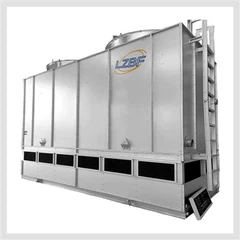
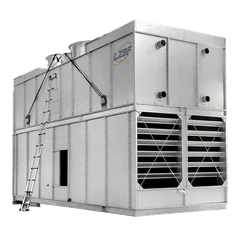
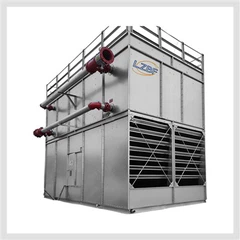
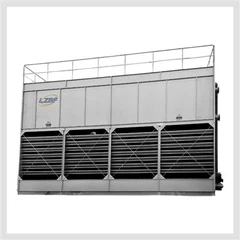

What Makes Closed Cooling Systems Maintain Stable Operation
Jul 07, 2026
Leave a message

 Closed cooling systems stand out from open cooling towers due to long-term stable cooling performance, constant water quality and low fluctuation of operating parameters.
Multiple internal structural designs, medium isolation mechanisms and independent circulation logic together eliminate external interference factors, forming a stable operation foundation unmatched by open systems.
The core elements supporting stable closed-loop operation include fully isolated medium circulation, independent heat exchange buffer, sealed water quality environment, controllable medium composition, integrated intelligent control and anti-concentration water quality protection, each dimension jointly restraining operating fluctuations caused by the external environment.
Products Description
The first core factor guaranteeing stability is the fully sealed isolation of internal process medium. Open cooling water directly contacts outdoor air, so temperature, dust, salt fog, rainwater and pollutants will continuously interfere with circulating water, resulting in constant changes of water quality, TDS and heat dissipation efficiency.

In closed systems, the cooling liquid that contacts production equipment flows inside fully welded sealed coils and pipelines, completely separated from external spray water and atmospheric environment. Outdoor high temperature, high humidity, dust and corrosive gas cannot enter the inner loop at all.

The internal medium will not absorb impurities from the air, so TDS rising speed is extremely slow, no algae, biological slime or mud accumulate in the cooling channel of the equipment. Without dirt blockage and scaling interference, the heat exchange area and thermal conductivity remain unchanged all year round, and the heat transfer capacity will not decline with the passage of operation time, realizing long-term stable heat dissipation output.
Products Description
Second, the double-layer heat exchange buffer structure weakens the impact of ambient temperature mutation. Closed cooling equipment adopts an indirect heat exchange mode: the inner closed loop carries away heat from production equipment, and the outer spray water and air only cool the coil surface as an auxiliary heat dissipation layer.

This dual-layer structure forms an effective temperature buffer zone. In summer high-temperature weather or sudden temperature rise at noon, the outer heat dissipation capacity drops temporarily, and the large-volume closed circulating medium can store heat to offset temperature fluctuations; in cold winter, antifreeze added to the inner loop stabilizes the medium freezing point and avoids rapid temperature drop of equipment cooling channels.

Unlike open towers whose cooling capacity changes synchronously with weather, closed systems will not produce sharp temperature drift of process medium even under drastic weather changes, and the temperature control accuracy can be stably controlled within ±1℃ for precision production equipment.
Products Description
Third, the controllable composition of closed circulating medium eliminates unstable water quality risks. Since the inner loop is completely isolated from the atmosphere, users can customize the medium formula according to working conditions without worrying about external pollution.
 Low-temperature regions can add ethylene glycol antifreeze in a fixed proportion to avoid pipeline icing and temperature failure; precision electronic equipment can use deionized water as circulating liquid to reduce TDS to an ultra-low level, eliminating scaling and electrochemical corrosion risks.
The total dissolved solids of the closed loop rise only through slow water replenishment, and the TDS growth rate is less than one-fifth of open systems.
Operators only need to conduct simple regular sampling testing, and there is no need for frequent blowdown and large-scale dosing of bactericides and scale inhibitors. Stable medium composition avoids sudden heat efficiency drop caused by rapid concentration of mineral salts, and the whole system maintains consistent heat exchange performance month after month.
Products Description
Fourth, independent closed circulation power ensures stable flow without external interference. The inner circulating pump forms an independent closed pipeline circuit, with fixed pipeline resistance and constant circulating flow rate.
 Open cooling towers are prone to filler blockage, floating mud blocking filters and air entrainment leading to unstable water flow, while closed pipelines have no air intake and no suspended dirt accumulation.
Variable-frequency circulating pumps cooperate with flow sensors to automatically adjust power according to equipment heat load, maintaining constant flow velocity inside the cooling channel. Stable flow ensures uniform heat taking away from all parts of the equipment, avoiding local overheating caused by uneven water flow, and further consolidates the stability of equipment operating temperature.
Products Description
Fifth, integrated intelligent linkage control suppresses parameter fluctuation in real time. Modern closed cooling units are equipped with temperature transmitters, liquid level sensors, pressure gauges and frequency conversion control modules.
 When the inner loop temperature rises slightly, the system automatically increases the fan speed and spray water volume; if the liquid level drops due to tiny medium volatilization, the automatic replenishment valve supplements liquid quantitatively.
All adjustment actions respond within seconds, forming a closed negative feedback control loop. Once abnormal parameters appear, the system actively adjusts operating components to pull temperature, flow and liquid level back to the set range, avoiding large parameter deviations that affect production stability.
Products Description
In addition, closed systems avoid many external unstable interference sources unique to open towers. Open equipment faces risks such as filler aging, floating mud drift, rainwater diluting circulating water and salt fog corrosion pipelines, while closed units isolate most environmental interference sources through shell sealing and coil isolation.
 The corrosion rate of internal pipelines is greatly reduced, and the failure frequency of heat exchange components is far lower, reducing shutdown fluctuations caused by equipment maintenance.
In conclusion, the stable operation of closed cooling systems is built on six core supports: medium air isolation, double-layer indirect heat exchange buffer, customizable stable circulating medium, unobstructed independent closed flow, real-time intelligent frequency conversion control and isolation of external environmental pollutants.
 These designs fundamentally cut off the interference channels between atmospheric environment and equipment cooling medium, restrain the continuous deterioration of water quality and heat exchange efficiency, and maintain long-term stable temperature, flow and heat dissipation capacity.
This comprehensive stability advantage makes closed loops the preferred cooling scheme for precision new energy, pharmaceutical, chemical and data center equipment with strict operation fluctuation requirements.
Send Inquiry