


What Are the Disadvantages of Evaporative Cooling?
Dec 06, 2025
Leave a message
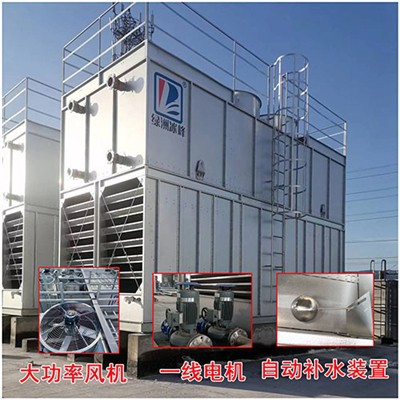
Evaporative cooling towers are widely used in industrial production, refrigeration systems and other fields due to their core advantages of high-efficiency heat exchange and low energy consumption. However, their operating principles and structural characteristics result in many inherent shortcomings in practical applications, which not only affect the adaptability to application scenarios, but also increase the pressure of operation and maintenance (O&M) costs and environmental control. The specific analysis can be carried out from the following aspects.
01
resource consumption and
scenario adaptability
02
management
and
equipment service life
03
environmental impact
04
high operational risks in winter
resource consumption and scenario adaptability
 From the perspective of resource consumption and scenario adaptability, strong dependence on water resources is one of the most prominent disadvantages of evaporative cooling towers. The core cooling logic of the equipment relies on water evaporation to take away heat, which will continuously consume a large amount of circulating water during operation.
In addition to evaporation loss, it is also necessary to regularly discharge scaling and impurity-containing wastewater to maintain water quality. The long-term water consumption is far higher than that of closed cooling towers. This shortcoming makes it difficult to promote in arid and water-scarce areas and regions with strict water resource control. Even if it is used compulsorily, additional water supply systems need to be equipped, which greatly increases the overall project investment and operation costs, and fails to achieve efficient resource utilization. Meanwhile, the operation effect of the equipment is significantly affected by ambient temperature and humidity. In high-temperature and high-humidity environments in summer, the capacity of air to hold water vapor decreases, leading to reduced water evaporation efficiency.
As a result, the cooling effect of the cooling tower will be significantly attenuated, making it difficult to meet the stable cooling temperature requirements of industrial production, which may indirectly affect the operating efficiency of production equipment and product quality.
management and equipment service life
 In terms of O&M management and equipment service life, evaporative cooling towers are faced with problems of high O&M frequency, high costs and frequent failures. The circulating water of the equipment is in an open state for a long time, which is prone to the mixing of dust and impurities in the air.
At the same time, water evaporation will increase the concentration of minerals such as calcium and magnesium in the water, which is very easy to form scale on the surfaces of fillings, pipelines and heat exchange components.
Scale will reduce heat exchange efficiency and increase energy consumption; in severe cases, it will even block pipelines and damage components. In addition, the warm and humid circulating water environment is also prone to the breeding of microorganisms such as Legionella and algae, which will not only pollute water quality and corrode equipment, but also pose health risks with water vapor diffusion.
Therefore, it is necessary to regularly add chemical agents such as scale inhibitors and bactericides, and clean fillings and pipelines periodically, resulting in cumbersome and frequent O&M processes and significant cumulative O&M costs in the long run. Meanwhile, the core components of the equipment have weak pressure resistance.
Most of the fillings are made of polymer materials, which are prone to aging, damage and blockage after long-term exposure to water vapor, impurities and chemical agents, and usually have a short service life. Frequent replacements are required to ensure the normal operation of the equipment, further increasing the comprehensive cost of equipment use.
environmental impact
 In the aspect of environmental impact, evaporative cooling towers will generate noise pollution and white mist phenomenon, causing certain interference to the surrounding environment. During operation, the high-speed operation of fans will produce continuous noise.
If the cooling towers are installed near factory areas or residential areas, the noise is likely to exceed the environmental control standards, affecting the working environment of staff and the daily life of surrounding residents. Even with noise reduction equipment, it is difficult to completely eliminate noise impact, and additional equipment investment will be incurred.
At the same time, the water vapor generated by circulating water evaporation is prone to form white mist in low-temperature environments, especially during periods with large temperature differences such as winter and early morning, when the white mist concentration is higher, which will reduce the visibility of the surrounding area and pose potential impacts on traffic travel.
If the circulating water contains residual chemical agents, the diffusion of white mist may also cause slight pollution to the surrounding soil and vegetation, increasing the difficulty of environmental control. In areas with strict environmental requirements, additional defogging devices need to be equipped, further reducing the cost-effectiveness of equipment use.
high operational risks in winter
 In addition, evaporative cooling towers also face the problem ofhigh operational risks in winter. In low-temperature environments, if the circulating water in the equipment pipelines is not drained in time or effective thermal insulation measures are not taken, it is very easy to freeze, resulting in pipeline freezing cracks and filling freeze damage, affecting the normal start-up and operation of the equipment.
Even if anti-freezing measures are taken, such as adding antifreeze and activating the heat tracing system, it will increase energy consumption and O&M costs, and the risk of freeze damage cannot be completely avoided. After shutdown in winter, a series of protective operations such as water drainage and thermal insulation are required, which are cumbersome and bring additional burdens to O&M work.
In summary

In summary, although evaporative cooling towers have the advantage of high-efficiency heat exchange, they have obvious shortcomings in water resource consumption, O&M costs, environmental impact and scenario adaptability. In practical applications, comprehensive considerations should be made based on regional water resource conditions, environmental requirements and O&M capabilities. If the core shortcomings cannot be avoided, complete auxiliary facilities need to be equipped to minimize the negative impacts caused by these shortcomings and ensure the stable and efficient operation of the equipment.
Send Inquiry