


Retrofitting for Efficiency: Upgrading from Open to Closed-Circuit Cooling Towers Without Major Reconstruction
Sep 30, 2026
Leave a message

For many factories and industrial plants, the cooling tower installed 10 or 15 years ago is no longer performing as it should.
Open cooling towers were the standard choice for decades. They are simple, relatively inexpensive upfront, and easy to understand. But as water costs rise, environmental regulations tighten, and production demands increase, the limitations of open systems become painfully clear.
 Common problems with aging open towers include:
Excessive water consumption from evaporation and blowdown
Frequent scaling on heat exchangers and pipes
Corrosion of metal components due to atmospheric contamination
High maintenance costs for cleaning, chemical treatment, and repairs
Unreliable cooling during peak summer temperatures
The natural response is to consider replacement. But the idea of tearing out an old tower, rebuilding foundations, rerouting piping, and shutting down production for weeks is enough to make any facility manager hesitate.
The good news is that retrofitting to a closed-circuit cooling tower does not have to mean starting from scratch.
Why Retrofit Instead of Replace?
 A full system replacement involves significant hidden costs:
Civil construction: New concrete foundations, structural supports, and drainage modifications
Piping modifications: Extensive rerouting of process and water lines
Production downtime: Weeks or even months of reduced or halted production
Disposal costs: Removing and disposing of the old equipment
Engineering and permitting: New design approvals and environmental permits
A well-planned retrofit minimizes or eliminates many of these costs by leveraging existing infrastructure.
The Retrofit Strategy: Key Approaches
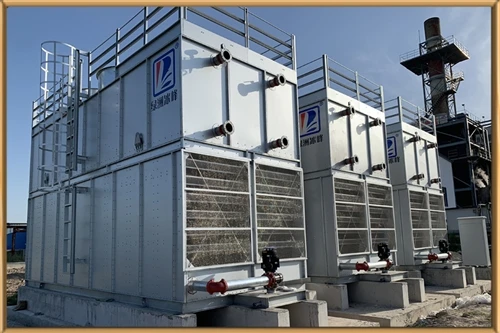
1. Same-Footprint Replacement
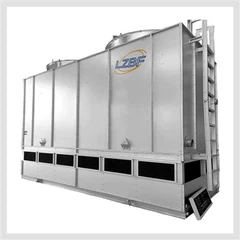
In many cases, a closed-circuit tower can be designed to fit within the same footprint as the existing open tower. Our engineering team can customize the dimensions, support structure, and connection points to match your existing foundation. This eliminates the need for new civil works and significantly reduces installation time.
2. Modular Installation
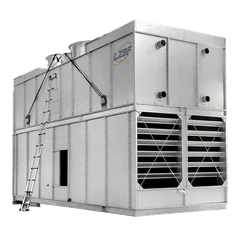
For facilities that cannot afford any production downtime, a modular approach may be the best solution. A new closed-circuit tower can be installed alongside the existing open tower. Once the new unit is commissioned and tested, the old tower is decommissioned and removed. This "parallel installation" strategy ensures continuous cooling throughout the transition.
3. Reuse of Existing Piping
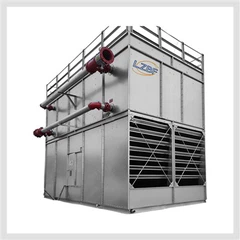
In a closed-circuit system, the process loop is sealed and clean. In many retrofit projects, the existing process piping can be reused with minimal modification. The key is to ensure that the piping is compatible with the new system's flow rates and pressures. Our engineers will evaluate your existing piping network and recommend any necessary upgrades.
4. Integration with Existing Controls
Modern closed-circuit towers come with advanced control systems, but they can often be integrated with your existing building management system (BMS) or PLC controls. This avoids the cost of replacing your entire control infrastructure.
What to Expect During a Retrofit Project

A typical retrofit project follows these stages:
Stage 1: Site Assessment
Our engineering team visits your facility to evaluate the existing tower, foundation, piping, electrical connections, and space constraints. We collect data on your current cooling load, water quality, and operating conditions.
Stage 2: Custom Design
Based on the site assessment, we design a closed-circuit tower that matches your requirements. This includes thermal calculations to determine the required heat exchange area, material selection for your environment, and structural design to fit your existing foundation.
Stage 3: Fabrication and Delivery
The tower is manufactured to your specifications. For custom or large units, we may fabricate sections off-site and assemble them at your facility to minimize on-site construction time.
Stage 4: Installation and Commissioning
Our installation team works alongside your maintenance crew to ensure a smooth transition. We handle mechanical installation, electrical connections, piping integration, and system testing. Once the tower is operational, we provide training for your operators.
Stage 5: Performance Verification
After a period of operation, we review performance data to confirm that the new tower is meeting the designed cooling capacity, water savings, and energy efficiency targets.
Real-World Benefits of Retrofitting

Facilities that have completed open-to-closed retrofits typically report:
30-50% reduction in water consumption due to the sealed process loop and optimized spray system
Significant reduction in maintenance costs because scaling and corrosion are dramatically reduced
Improved cooling reliability even during peak summer conditions
Extended life of downstream equipment such as heat exchangers, pumps, and compressors
ROI within 2-3 years through water, energy, and maintenance savings
Is Retrofitting Right for Your Facility?
Not every situation is suitable for a retrofit. Factors such as the condition of existing piping, available space, and current cooling load requirements all influence the feasibility of the project.
The best way to determine if a retrofit makes sense for your facility is to have a qualified engineer conduct a site assessment. In many cases, the savings from reduced water usage and maintenance alone can justify the investment within a few years.
Considering an upgrade from an open to a closed-circuit cooling tower? Contact us for a free retrofit feasibility assessment. Our engineering team can evaluate your existing system and provide a detailed proposal with projected savings and installation timeline.

Send Inquiry