


Core Advantages of Closed Cooling Towers
Jun 16, 2026
Leave a message


First, the fully sealed circulation reliably preserves water quality, prevents pipeline scaling and corrosion, and significantly extends the service life of the entire water cooling system.

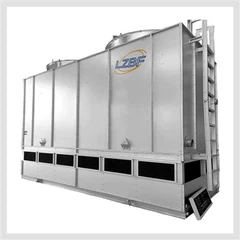
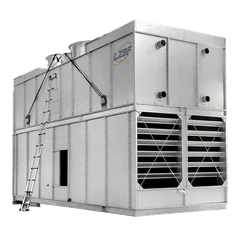
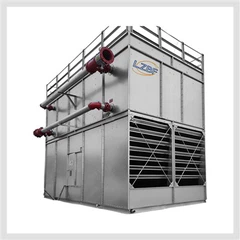
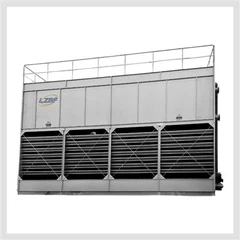
The internal heat exchange coils of closed cooling towers are completely enclosed. Process circulating water flows solely within stainless steel coils without contacting airborne dust, sediment, flocculent debris and corrosive gas, eliminating the common water contamination troubles of open cooling towers.

The cooling water of ordinary open towers is exposed to the atmosphere all year round. Airborne contaminants continuously dissolve in water, while calcium and magnesium ions keep concentrating, which readily forms thick limescale on the inner walls of molds, heat exchangers and main unit water channels.
Scaling clogs pipelines and weakens heat exchange efficiency, and may even trigger emergency shutdowns caused by equipment overheating in severe cases. In contrast, closed systems maintain stable water quality without frequent heavy dosing of scale removers and corrosion inhibitors.
Stainless steel coils feature strong resistance to acid, alkali and oxidation, cutting the corrosion rate of supporting facilities including circulation pipelines, water pumps, plate heat exchangers and crystallizers by over 70%. This reduces malfunctions such as pipeline leakage and valve damage, and saves substantial costs on pipeline replacement and equipment repair over long-term operation. The equipment is especially suitable for industries with strict standards on water circuit cleanliness, such as precision machine tools, photovoltaic silicon material production and lithium battery energy storage.
Second, it delivers excellent water-saving performance with minimal water loss, making it ideal for water-deficient regions and factories under strict environmental supervision.

Traditional open cooling towers dissipate heat via water evaporation, leading to massive continuous loss of circulating water alongside severe water drift. For closed cooling towers, only a small amount of external spray water evaporates, and zero loss occurs to fully sealed process cooling water. Its total water consumption is merely 1/5 to 1/10 of that of open cooling towers.


This advantage is highly valuable for arid northern areas, enterprises subject to water usage quotas, and industrial parks with rigorous wastewater discharge regulations. Besides, no water drift occurs. Mist will not drift onto factory floors and workshop walls to create slippery surfaces or corrode wall structures, nor will frozen mist bring safety hazards in winter. Outdoor installation will not cause dampness and short-circuit risks to surrounding electrical control cabinets and cables.
Third, it maintains stable performance all year round with powerful anti-freezing capacity under low temperatures and consistent heat exchange efficiency in four seasons.
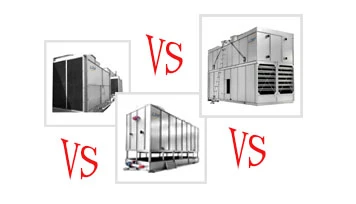
In cold winter, open cooling towers are prone to frozen water basins and pipelines, which requires continuous electric heat tracing and sharply raises energy consumption; they may even stop working properly in frigid weather. Closed cooling towers can adopt anti-freezing additives in the spray system or switch to an independent dry cooling mode.

Fourth, it cuts operation and maintenance costs, lowers equipment failure rates and reduces manual management workload.

Open cooling towers demand regular cleaning of silt in water basins, filler replacement and floating debris removal, as well as weekly water quality testing and biocide dosing, resulting in frequent manual maintenance. The sealed process water circuit of closed cooling towers barely accumulates silt and impurities, only requiring simple quarterly cleaning of spray filters and fillers with drastically reduced chemical dosing.


Fifth, it allows flexible installation layout adaptable to various factory sites, with outstanding environmental protection and noise reduction effects.

Closed cooling towers adopt an integrated all-in-one structure without the need for large underground cold water pools, occupying a smaller floor area. They can be installed on rooftops, vacant workshop grounds or factory corners to lower civil construction costs.
The equipment shell is made of sound-insulated sheet metal, and noise generated by fans and spray water flow is specially treated, reducing noise level by 10 to 15 decibels compared with traditional open towers. It can be normally deployed in factories adjacent to office buildings and living quarters.
Meanwhile, no large volume of water mist is discharged externally, which avoids corrosion of surrounding steel structure workshops and water stain pollution on nearby green plants and walls, meeting the construction standards for clean and eco-friendly factory zones.

One-stop Manufacturer of Closed Cooling Towers in China
In summary, closed cooling towers integrate multiple strengths including stable water quality, water conservation & freeze resistance, low maintenance, reliable all-year performance and noise reduction, solving the prominent pain points of traditional open cooling towers such as scaling, excessive water consumption, winter icing and water pollution. Although the upfront procurement cost is slightly higher, comprehensive savings on water consumption, maintenance and equipment wear over long-term use can quickly offset the price gap. It serves as a cost-effective long-term cooling solution for mid-to-high-end industrial cooling applications.
Send Inquiry